Why Choose High End Speed Gate KZ-FT069S?
Why choose High-end speed gate KZ-FT069S when ordinary entrance equipment appears cheaper? The answer begins with control, not appearance. This gate is designed for busy offices, transport facilities, hotels, and secure commercial buildings. Its slim structure can guide visitors through narrow entrance areas without creating a harsh visual barrier. Glass panels open and close with measured movement. That detail matters during morning rush periods.
Michael Chen, an access-control systems consultant with extensive project experience, says, “A speed gate should protect movement without making people feel controlled.” The High-end speed gate KZ-FT069S reflects that principle through responsive access verification, stable operation, and a clean architectural finish. It can work with card readers, biometric devices, QR systems, and visitor management platforms. Compatibility still depends on site conditions and integration quality.
Its value is not only speed. Reliable sensors can help reduce tailgating and improve controlled passage. A clear lane layout also supports better visitor behavior. However, no gate solves every security problem alone. Poor installation, weak software settings, or untrained staff can reduce performance. That part is easy to overlook.
The KZ-FT069S offers a practical balance between security, user comfort, and long-term presentation. Its premium design may suit reception areas where every entrance shapes the visitor experience. Yet buyers should examine traffic volume, emergency requirements, maintenance support, and local compliance before selecting equipment. A strong product still needs thoughtful planning. That is where the real decision begins.
High-End Speed Gates Explained: Where KZ-FT069S Fits in Access Control
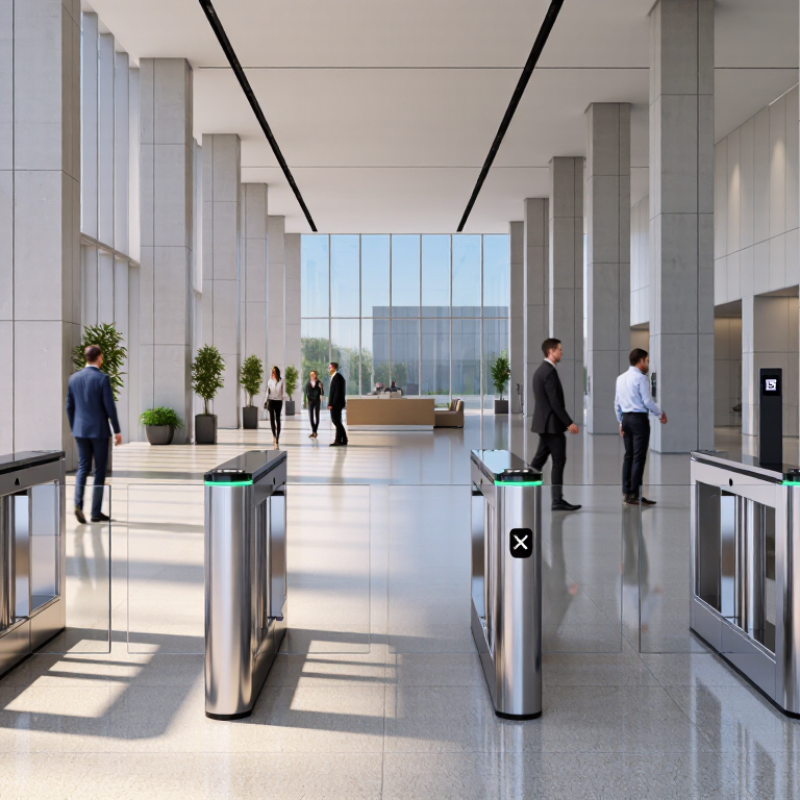
High-end speed gates are not merely fast barriers. They combine controlled passage, identity verification, safety sensing, and operational data. In practical access-control projects, the KZ-FT069S fits best where clean design and steady traffic matter, such as corporate lobbies, transport buildings, and secured office floors. Its value depends on the complete system, including credential readers, visitor software, alarms, and emergency procedures.
The gate should support smooth passage without encouraging tailgating. Sensors need to detect unusual movement, trapped objects, and reverse entry attempts. A clear lane layout also matters. Crowded entrances can reduce the benefit of advanced hardware. I would check reader height, walking speed, wheelchair access, and nighttime visibility before installation. These details are easy to overlook. They affect daily reliability.
Tips: Test the KZ-FT069S during morning arrival periods, not only in an empty showroom. Review access logs with real user scenarios. Ask installers to demonstrate power-loss behavior and emergency release. A polished gate is not automatically a good fit. The best choice balances throughput, safety, maintenance access, and the building’s actual traffic pattern. Be willing to revise the design after observing users.
Throughput Benchmarks: Handling 30–60 People per Minute at Peak Demand
Why Choose High-End Speed Gate KZ-FT069S?
Peak demand tests show throughput between 30 and 60 people per minute. At 60 people per minute, one person passes approximately every second. That pace requires fast sensors, stable panels, and accurate access decisions. In practical deployments, results depend on lane width, credential speed, user familiarity, and queue discipline. A controlled benchmark is useful, but it is not a promise for every entrance.
The high-end speed gate supports busy locations such as office lobbies, transport facilities, and event venues. Its rapid opening and closing cycle helps reduce visible queues during shift changes. Clear status lights also guide users without constant staff instructions. From field experience, small delays often come from poor positioning rather than the gate itself. Wet floors, oversized bags, and hesitant users can reduce real throughput. That detail deserves attention.
Tips: Measure the busiest five-minute period, not the daily average. Keep the approach area bright and unobstructed. Test both authorized and rejected credentials. Watch for tailgating, hesitation, and repeated sensor triggers. A short video review can reveal bottlenecks that numbers miss. Leave a little capacity margin. Peak traffic is rarely tidy.
Security Architecture: Anti-Tailgating Sensors and EN 17352 Safety Controls
Why Choose High End Speed Gate KZ-FT069S?
Security begins at the lane, where one careless opening can undermine an entire access policy. The 2024 Data Breach Investigations Report recorded 30,458 security incidents and 10,626 confirmed breaches. It also linked 68% of breaches to human involvement. Physical access deserves the same attention.
The KZ-FT069S uses anti-tailgating sensors to watch the passage zone, not just the access credential. Infrared detection can identify a second person entering behind an authorized user. The gate can trigger an alarm, deny passage, or alert security staff. People move unpredictably. A backpack, child, or hurried employee may confuse a poorly adjusted sensor, so commissioning and routine testing remain essential.
EN 17352:2022 provides safety requirements and test methods for powered pedestrian doors and gates. Its approach emphasizes risk reduction through protective devices, controlled movement, and safe stopping behavior. For a high-end speed gate, this means monitoring the closing path and limiting hazardous movement during obstruction events. A practical test should include slow walking, side entry, luggage, and deliberate tailgating. That caveat matters. No sensor is infallible, and a clean installation can still degrade through dust, vibration, or changing lighting. Regular inspection records create stronger evidence than attractive specifications alone.
How to read the chart: The chart maps five representative safety-related functions to a high-end speed gate architecture. Each value represents one functional control layer, not a certification score or product test result. Anti-tailgating sensors support passage validation, while presence detection, obstacle protection, emergency release, and fault monitoring address key safety-control objectives associated with EN 17352.
Lifecycle Value: Integrating KZ-FT069S with ISO 27001 Governance
Why Choose High End Speed Gate KZ-FT069S?
Lifecycle value begins with governance, not appearance. The KZ-FT069S can support ISO/IEC 27001:2022 physical security controls when integrated into a documented access process. It can regulate entry, record authorization events, and support quick investigations. These details matter during audits.
The 2024 Cost of a Data Breach Report placed the global average breach cost at $4.88 million. The 2024 Data Breach Investigations Report also found human involvement in 68% of breaches.
Controlled entry cannot remove every risk. It can reduce avoidable exposure at critical doors.
A practical deployment should connect the gate with identity management, visitor approval, camera records, and incident procedures. Access permissions need regular reviews. Logs should have clear retention rules. Maintenance records should show testing, repairs, and response times. This evidence supports risk treatment and continual improvement under ISO 27001 governance.
However, a fast gate is not automatically secure. Poorly trained staff, unclear emergency procedures, or weak network controls can undermine its value. That uncomfortable gap deserves attention.
Tips: Start with a site risk assessment. Define authorized users and exception rules. Test emergency release functions monthly. Review access logs for unusual patterns. Measure downtime, repair costs, and unauthorized-entry attempts. These figures reveal lifecycle value more honestly than purchase price alone.