What Are the Top Takeaway Food Containers for Global Buyers?
For global foodservice buyers, choosing Takeaway Food Containers is a practical sourcing decision, not merely a packaging trend. The right format must protect meals, control costs, and support reliable delivery across different climates. A soup tub may face heat, pressure, and rough handling before reaching a customer’s table. Small details matter. Lids should fit securely, bases should remain stable, and surfaces should support clear labeling. Yet no container performs perfectly in every market.
Experienced purchasing teams compare material, capacity, closure design, insulation, stackability, and storage requirements. They also request food-contact documentation, migration test results, and supplier quality records where applicable. Local rules can differ, even between neighboring countries. A container accepted in one region may need additional verification elsewhere. Buyers should confirm temperature limits for hot, chilled, oily, and acidic foods. Cost deserves a wider view. A low unit price can become expensive when leakage causes refunds, waste, or damaged deliveries.
This guide examines leading options, including paperboard boxes, molded fiber trays, plastic tubs, and reusable systems. It considers real operating conditions rather than showroom appearance alone. Samples should be filled, closed, stacked, transported, and checked after service. That test may expose an inconvenient truth. The most sustainable choice is not always the lightest one; reuse depends on collection and washing systems. Reliable decisions require evidence, honest trade-offs, and periodic review. Global buyers can then match container performance with menu needs, regional requirements, and customer expectations.
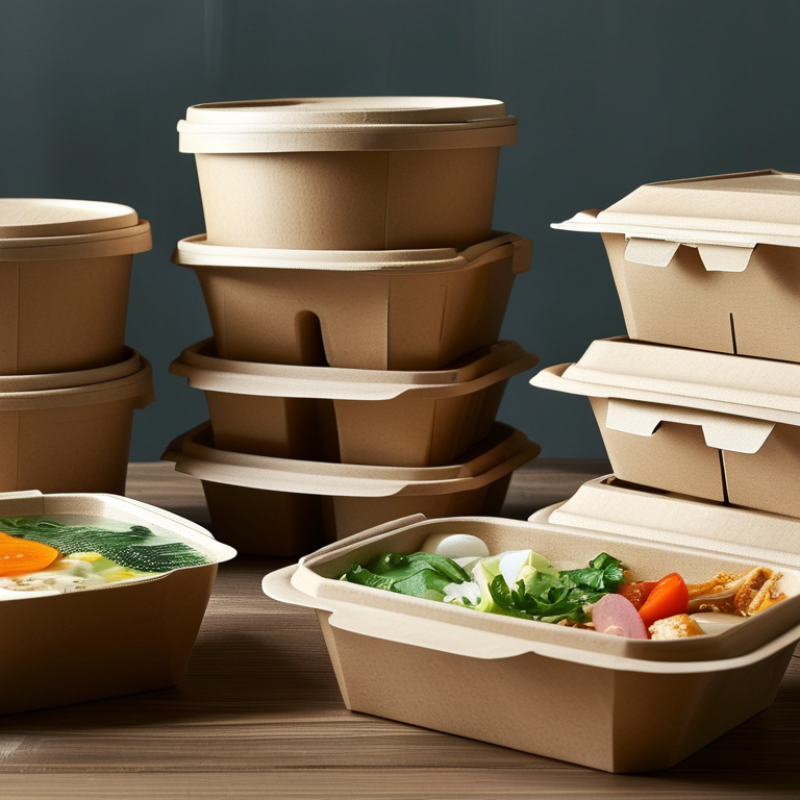
What Makes a Takeaway Food Container Suitable for Global Buyers?
A suitable takeaway food container must survive more than a short delivery trip. It may face hot soup, chilled salad, motorbike vibration, and uneven stacking. A secure lid matters, but venting matters too. Without controlled vents, steam can soften fried food and create leaks. Buyers should check temperature limits, oil resistance, microwave suitability, and freezer performance. Food-contact documentation should match the destination market, not just the manufacturing country. Requirements differ across regions, and translation errors can delay approval.
Material choice also affects global practicality. Fiber containers can support a lower-plastic strategy, but moisture resistance and coating recovery need careful testing. Reusable formats may reduce waste, yet reverse logistics can make them unrealistic for smaller cities. The OECD’s Global Plastics Outlook (2022) states that packaging accounts for about 40% of global plastic waste. UNEP’s Turning off the Tap report (2023) estimates that system changes could reduce plastic pollution by 80% by 2040. These figures support better design, not careless material switching. A perfect container does not exist. Cost, durability, recyclability, and local infrastructure still conflict.
Tips: Test filled containers for six hours, not only empty samples. Drop them from counter height. Check lid fit after heating. Ask for food-contact declarations, migration-test results, carton dimensions, and pallet data. Small details matter. Also inspect the container after real delivery; laboratory results can look better than reality.
How Do Container Features Affect Food Safety and Performance?
For global buyers, the best takeaway container is not simply the cheapest or lightest option. It must protect food from contamination, leakage, heat, and rough transport. Polypropylene containers often handle hot meals well, while fiber-based containers can suit dry or moderately moist foods. Material choice matters.
Food-contact documentation should confirm that the container suits its intended temperature and food type. A container rated for cold storage may deform beside steaming rice. Microwave claims also require careful testing. Do not assume. Requirements differ across markets, so suppliers should provide test reports, migration data, and clear usage limits.
The closure is equally important. A firm lid reduces spills, but an overly tight seal can trap steam and soften fried food. Small vents help release pressure. They can also leak if poorly designed. I have seen containers pass a simple shake test yet fail after stacking overnight. That assumption fails. Buyers should check seal strength, drop resistance, stack stability, and condensation performance. Transparent walls help staff inspect portions quickly, while smooth surfaces make cleaning and filling more consistent. No container performs perfectly in every situation.
What Packaging Standards Apply in Different International Markets?
Global buyers should treat food containers as regulated food-contact articles, not simple boxes. In the European Union, packaging must meet food-contact safety rules and emerging Packaging and Packaging Waste Regulation requirements. Recyclability, recycled content, labeling, and material reduction are becoming purchasing conditions. In the United States, suppliers must verify compliance with applicable Food and Drug Administration food-contact provisions. China uses national standards, including GB 4806 series requirements, for materials touching food.
Local testing matters. A container for hot noodles needs steam resistance, leak control, and stable stacking. A chilled salad box needs different performance. Migration testing should match the food, temperature, and contact time. OECD’s Global Plastics Outlook reports that packaging creates about 40% of global plastic waste. That figure explains why authorities increasingly examine material weight and end-of-life options. However, “recyclable” can be misleading when local collection systems cannot process the container.
Buyers should request declarations of compliance, test reports, material specifications, and traceability records. They should also check whether coatings, inks, adhesives, and additives are covered. In the EU, paper containers with plastic barriers may face stricter recyclability scrutiny. In North America, compostable claims require recognized testing and suitable facilities. Asian markets may apply different migration limits and labeling rules. A certificate alone is not enough. Practical trials should include hot filling, oil exposure, freezer storage, transport vibration, and lid removal. Some containers still fail at the corners. That uncomfortable detail deserves attention.
Sources: OECD, Global Plastics Outlook, 2022; European Commission, Packaging and Packaging Waste Regulation, 2025; U.S. Food and Drug Administration, Food Contact Substances guidance.
What Are the Top Takeaway Food Containers for Global Buyers?
The chart compares the number of core compliance areas buyers should verify when sourcing takeaway food containers in major international markets. These areas include food-contact authorization, good manufacturing practice, chemical or migration controls, traceability, and market-specific sustainability or substance restrictions.
The checklist reflects commonly applicable frameworks, including EU Regulation (EC) No 1935/2004 and Regulation (EC) No 2023/2006, U.S. FDA food-contact requirements under 21 CFR, UK food-contact legislation, Canada’s Food and Drugs Act, Australia and New Zealand’s FSANZ food-contact standards, and Japan’s Food Sanitation Act and positive-list system. Requirements depend on the material, food type, temperature, and intended use.