China Top Mini Circuit Breaker Suppliers for Global Buyers
Choosing reliable China Mini Circuit Breaker suppliers requires more than comparing prices or browsing product images. Global buyers need dependable electrical protection, consistent production, and clear technical documentation. A suitable supplier should explain rated current, voltage, breaking capacity, pole configuration, and B, C, or D trip curves without hesitation.
Experienced buyers often request samples before approving large orders. They may inspect terminal screws, DIN-rail clips, insulation materials, and label quality. Small details matter. A loose terminal can create serious installation concerns. Suppliers should also provide relevant test reports, quality certificates, factory information, and production records. Compliance with recognized standards, such as IEC 60898-1, should be verified for the intended market. Certificates alone are not enough.
This guide examines leading Chinese manufacturers serving distributors, contractors, and equipment brands worldwide. It considers product range, manufacturing capability, export experience, customization support, minimum order quantities, and communication reliability. Factory audits and independent inspections can reveal practical issues that online catalogs hide. Lead times may change during peak seasons. That risk deserves attention.
A supplier can offer an attractive quotation and still provide weak after-sales support. Buyers should confirm warranty terms, packaging strength, replacement procedures, and response times before placing an order. The best partnership is not always the cheapest one. It is the one that protects performance, delivery schedules, and customer trust over time. Some evaluations remain subjective, so buyers should compare evidence carefully and keep their own records.
Mini Circuit Breakers: Definition, Purpose, and Main Applications
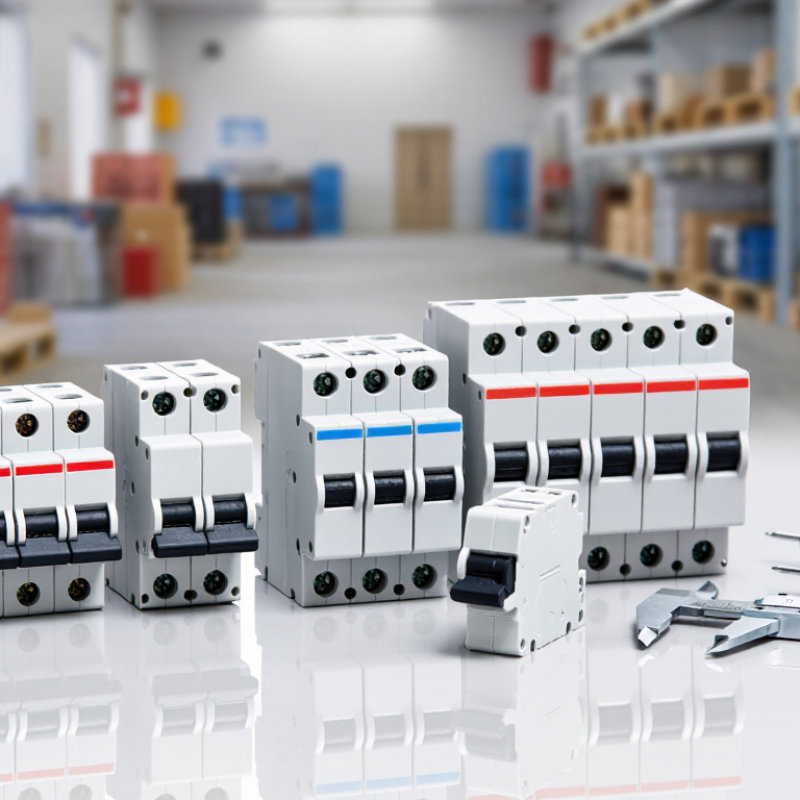
Mini circuit breakers are compact protective devices for low-voltage electrical circuits. They interrupt current when an overload or short circuit creates unsafe conditions. Unlike fuses, they can usually be reset after the fault is removed. Their small size makes them practical for distribution boards, control cabinets, and space-limited installations.
Inside an MCB, a thermal element responds to sustained overloads. A magnetic mechanism reacts almost instantly to short circuits. Common designs use one, two, three, or four poles. Selection depends on circuit layout and system requirements. Buyers should check rated current, operating voltage, breaking capacity, and trip curve. These details matter more than appearance.
They are widely used in homes, offices, workshops, lighting circuits, socket outlets, and small machinery. During panel inspections, I often find that incorrect current ratings cause avoidable nuisance trips. A breaker should protect the cable, not merely match the connected appliance. DIN-rail mounting also simplifies installation and replacement. For international sourcing, buyers can review test reports, production controls, marking accuracy, and compliance with relevant standards such as IEC 60898-1. Still, paperwork alone cannot prove consistent performance. Sample testing and technical communication remain important. Even experienced purchasers may overlook ambient temperature, terminal size, or available fault current. That oversight can become expensive.
Miniature circuit breakers (MCBs) protect low-voltage electrical circuits from overloads and short circuits. Under IEC 60898-1, the instantaneous magnetic tripping ranges are typically 3–5 times the rated current for Type B, 5–10 times for Type C, and 10–20 times for Type D. Type B is commonly used for residential circuits, Type C for general commercial and industrial loads, and Type D for equipment with high inrush currents.
Leading China-Based Mini Circuit Breaker Supplier Categories
China-based mini circuit breaker suppliers usually fall into several practical categories. Direct manufacturers produce standard thermal-magnetic breakers for residential, commercial, and light industrial panels. OEM and ODM suppliers adapt pole numbers, trip curves, terminal designs, labels, and packaging. Export-focused suppliers often combine factory sourcing with documentation and shipment coordination. Small details matter.
Experienced global buyers should compare suppliers by technical control, not catalog size. Request test reports, production inspection records, rated current ranges, breaking capacity data, and applicable IEC references. Check whether samples match the final production design. A 16A breaker may look identical across catalogs, yet its trip response and terminal clamping can differ. Ask for evidence.
Distributors and project-oriented suppliers can support mixed orders, replacement parts, and regional delivery schedules. They may suit buyers who need several ratings without placing large factory orders. During evaluation, inspect the housing finish, label clarity, screw torque, rail fit, and contact movement. A sample should be tested under controlled conditions, not judged by appearance alone. Some suppliers explain weaknesses honestly; that is valuable. No supplier category fits every project. Rechecking assumptions can prevent costly specification errors.
Quality Standards, Certifications, and Product Testing Requirements
China Top Mini Circuit Breaker Suppliers for Global Buyers
A dependable supplier should identify the standard behind every mini circuit breaker. IEC 60898-1 commonly applies to household and similar installations. IEC 60947-2 may suit industrial applications, depending on the design and use. Buyers should request current test reports, not only marketing statements. Reports must match the exact model, rated current, pole configuration, and trip curve.
Certification also requires careful checking. CE marking may support European market access, but it does not replace technical documentation or safety testing. CB Scheme documents can help with international acceptance, while other markets may require local approvals. Ask for certificate numbers, issuing laboratories, expiry dates, and factory details. Verify them independently when possible. A copied certificate is a serious warning.
Testing should include insulation resistance, dielectric strength, temperature rise, mechanical endurance, electrical endurance, and short-circuit performance. Trip tests should confirm both thermal and magnetic operation. Inspect terminal torque, contact alignment, housing quality, and label durability. Request production samples from different batches. One sample can look excellent. That gap matters. Suppliers should maintain calibrated equipment, traceable records, incoming material checks, and final inspection procedures. In practice, factory audits often reveal small weaknesses, such as incomplete records or inconsistent torque control. These details deserve discussion before a purchase order. Reliable suppliers welcome technical questions and explain failures honestly. Safety cannot depend on attractive packaging.
How Global Buyers Can Compare Suppliers and Place Orders
Global buyers need more than a low quotation when comparing China’s mini circuit breaker suppliers. The MarketsandMarkets Circuit Breaker Market report estimates that the global market will grow from about USD 7.2 billion in 2023 to USD 10.2 billion by 2028. The IEA’s Electricity 2024 report also forecasts strong global electricity demand growth through 2026. Demand is rising, but quality risks remain.
I compare suppliers through a technical checklist. It covers rated current, poles, tripping curves, short-circuit capacity, and operating temperature. Ask whether products comply with IEC 60898-1 or IEC 60947-2, depending on the application. Request current test reports, certification files, product drawings, and traceable batch numbers. A sample test is essential. Paperwork alone is not enough.
Then I review production capacity, minimum order quantity, packaging, lead time, and Incoterms. A factory video call can reveal basic details, such as test equipment and storage conditions. I once focused too heavily on unit price and underestimated inspection costs. That was a poor purchasing decision. Buyers should also define acceptance criteria before placing an order. For example, specify sampling levels, labeling, carton strength, and replacement procedures. Independent pre-shipment inspection adds cost, but it may prevent larger losses. Compare three written quotations, not three sales promises. Reliable suppliers answer technical questions clearly, even when the answer is inconvenient.