7 Best 3D Rendering Demo Services for Global Buyers?
Global buyers often judge a product before touching it. A clear 3D Rendering Demo can show form, scale, materials, and use in seconds. It can also expose weak design decisions. That matters when samples cross borders, budgets, and time zones. Yet a polished animation is not proof of production quality. This guide examines seven demo services through practical buyer concerns, including visual accuracy, communication, revisions, file delivery, and commercial reliability. The selection is not absolute. Needs differ.
From furniture and consumer electronics to machinery and architectural concepts, each service has a different strength. Some focus on photorealistic product scenes. Others offer interactive viewers, animated walkthroughs, or rapid concept visualization. We consider how teams handle reference files, technical drawings, texture libraries, camera angles, and approval rounds. Small details matter. A missing dimension can distort a whole scene. An unclear revision policy can create unexpected costs. Global buyers should also check portfolios, client evidence, delivery schedules, and data-handling practices before signing.
The comparisons aim to support informed decisions, not replace professional due diligence. We look for transparent processes, relevant experience, consistent output, and responsive support. These signals help separate dependable specialists from attractive but shallow presentations. Still, no ranking can predict every collaboration. A service may excel creatively yet struggle with engineering precision. Another may be reliable but less flexible. Read the findings alongside your product stage, target market, and internal workflow. Ask specific questions. Request a small test when possible. Good rendering saves time only when it reflects reality.
What 3D Rendering Demo Services Offer Global Buyers
What 3D Rendering Demo Services Offer Global Buyers
The best 3D rendering demo services help global buyers inspect products before physical samples arrive. They turn measurements, sketches, and reference photos into detailed visual evidence. A strong product demo shows surface texture, stitching, reflections, and accurate color under different lighting. That level of detail reduces misunderstandings across languages and time zones.
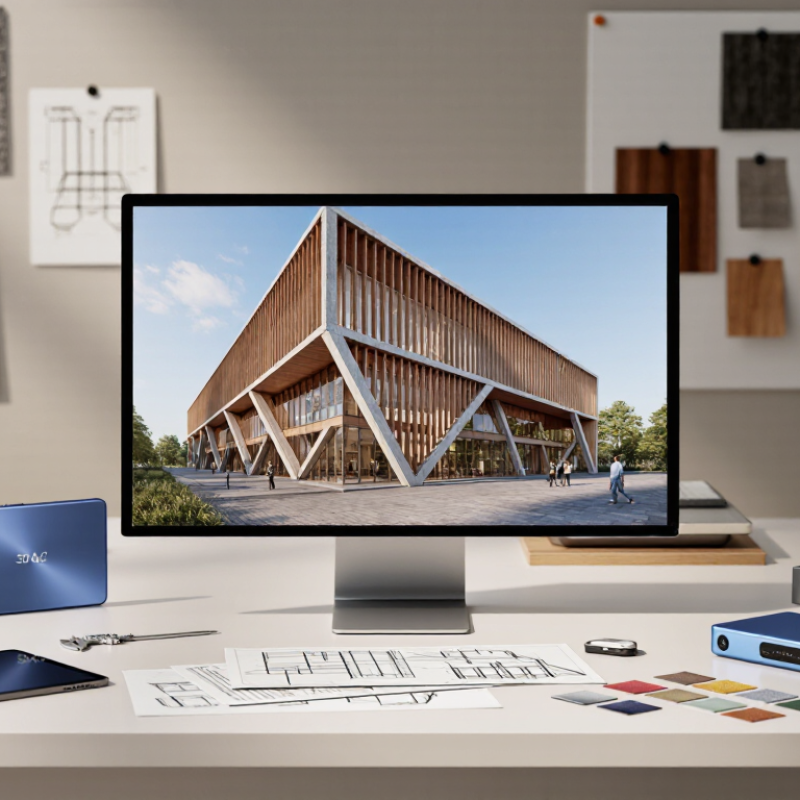
Architectural rendering services present complete buildings from street level, interior, and aerial views. Interior demos can show furniture placement, material combinations, window light, and walking paths. Product animation explains moving parts, assembly steps, and practical use. Interactive 3D viewers let buyers rotate an item and inspect hidden angles. Virtual reality demos create a stronger sense of scale, though they require suitable equipment and careful file preparation.
Technical rendering services support machinery, equipment, and engineered components. They can highlight dimensions, connection points, airflow, or internal mechanisms without exposing confidential production details. Configurator demos allow buyers to change finishes, sizes, or layouts in real time. This is useful for international sales teams handling different preferences and specifications.
Reliable providers should request clear briefs, confirm units, and document revision limits. They should also protect files and label assumptions. A polished image can still show the wrong material. That matters. Global buyers should review sample work, delivery formats, correction policies, and communication practices. Rendering is not a substitute for physical testing. It can fail. Lighting may hide defects, and scale may feel misleading on a small screen. Experienced teams admit these limits and revise their process when buyer feedback reveals gaps.
How to Evaluate Rendering Quality, Technology, and Expertise
Choosing a 3D rendering demo service requires more than admiring glossy images. A strong evaluation begins with the brief. Can the team show accurate furniture scale, natural shadows, and believable material textures? Ask for a sample scene with clear measurements. A marble surface should show subtle veins, not a repeated digital pattern. Glass should reflect the room without looking opaque.
Technology matters, but tools alone do not guarantee quality. Review the service’s workflow, including modeling, lighting, rendering, and revision control. Reliable teams explain file formats, delivery stages, and backup procedures in plain language. Request a low-resolution preview before final production. This reveals composition problems early. It also shows how carefully the team responds to feedback.
Expertise appears in small decisions. Check whether curtains hang with realistic weight, whether daylight changes across surfaces, and whether architectural edges remain clean at close range. Ask to inspect several completed projects, not only the best image. A polished demo can hide inconsistent work. I have learned that fast previews sometimes create false confidence. Speed is useful, but rushed geometry may fail during later edits. Keep written requirements, confirm time zones, and record approved changes. Clear communication is part of rendering quality, not an extra service.
3D Rendering Service Evaluation Framework
Recommended weighting for comparing rendering providers: visual quality and technical reliability receive the highest priority, while communication and delivery efficiency support the final purchasing decision.
The percentage values represent a practical buyer evaluation model with a total score of 100%.
Seven 3D Rendering Demo Services Worth Considering
Seven 3D Rendering Demo Services Worth Considering
Global buyers increasingly expect products to feel tangible before purchase. Grand View Research estimates that the global 3D rendering market could grow at a 25.7% CAGR from 2023 to 2030. That growth supports seven useful demo services: product modeling, architectural walkthroughs, real-time configurators, 3D animation, augmented-reality assets, virtual staging, and technical visualization. Each service answers a different question. Product models reveal materials and proportions. Walkthroughs show spatial flow. Configurators test color, size, and finish changes. AR assets place products inside real rooms.
Choose evidence, not impressive motion alone. A service provider should show wireframes, lighting tests, revision records, and final exports. Wyzowl’s 2024 Video Marketing Statistics report found that 91% of businesses use video as a marketing tool, but video quality does not guarantee buyer trust. A dazzling animation may hide inaccurate dimensions. I have seen that mistake before. Ask for measurement checks, file compatibility, delivery timelines, and usage rights. For international buyers, confirm subtitles, local measurements, and time-zone support. Real-time demos also need stable loading on ordinary devices, not only powerful workstations. The best choice may feel less dramatic. It should make decisions clearer.
How to Choose the Best Service for Your Project Needs
Choosing among 3D rendering demo services requires more than comparing attractive images. Start with your project’s purpose: product sales, architectural approval, investor presentation, or interactive viewing. Each goal needs different lighting, modeling detail, animation, and file formats. Autodesk’s 2024 State of Design & Make report surveyed more than 5,000 industry professionals, showing how strongly businesses now value digital tools and efficient workflows. Ask whether the service can match your software, deadlines, revision process, and target market.
Tips:
Request one small test scene. Check material accuracy, camera composition, revision limits, and communication speed. A white kitchen should show realistic cabinet edges, soft shadows, and believable reflections. Do not judge quality from one dramatic image. Ask for source files, usage rights, technical specifications, and a clear delivery schedule. A cheaper quote may become expensive after repeated corrections.
Experience also matters. During reviews, compare the demo with your drawings, product samples, or site photographs. Experienced artists notice scale problems before they become costly. The 2024 Deloitte Engineering and Construction Industry Outlook highlights continued investment in digital transformation, but technology alone cannot replace clear project information. Share reference images and measurable requirements. Some services may promise photorealism too quickly. That is a warning sign. I have also learned that “perfect” lighting can hide weak modeling, so inspect close-ups, corners, textures, and shadows. Choose the team that explains limitations honestly, not merely the one with the most impressive portfolio.