
shining bright

a British lighting manufacturer with a difference

Obsessed with solving problems, not just selling 'stuff': we were born from a belief that the lighting industry deserved better.

China Top 10 Automotive Lens Manufacturers?

China’s automotive supply chain has become a major force in global vehicle optics. This article examines ten leading Chinese Automotive Lens manufacturers and their practical strengths. The list considers optical clarity, injection-molding accuracy, coating durability, production scale, and customer support. It also reviews experience with cameras, lamps, LiDAR systems, and advanced driver-assistance platforms.

Automotive optics specialist Dr. Wolfgang Huhn once observed, “Automotive lighting is becoming an increasingly complex optical system.” His statement also applies to modern lens manufacturing. A lens is no longer just a transparent cover. It must manage glare, heat, vibration, ultraviolet exposure, and strict dimensional tolerances. A small surface defect can distort a camera image or weaken a lighting pattern. Factory details matter. Clean rooms, automated inspection, calibrated molds, and traceable testing often reveal more than marketing claims.

This ranking should not be treated as permanent. Supplier capability changes with investment, new contracts, and technology development. Some companies may excel in exterior lamps, while others perform better with camera lenses or precision optical components. Public information can also be incomplete. That limitation deserves attention. Therefore, readers should verify certifications, test data, production capacity, and actual vehicle applications before choosing a supplier. The following manufacturers are presented as strong candidates, not unquestionable winners. Their value depends on project requirements, regional compliance, and long-term engineering cooperation.
China Top 10 Automotive Lens Manufacturers?

What Automotive Lenses Are and Why They Matter

China Top 10 Automotive Lens Manufacturers?

Automotive Lenses are precision optical components used in headlights, taillights, cameras, radar covers, and interior displays. They guide, spread, or protect light and sensor signals. Their shape affects beam distance, glare control, image clarity, and driver reaction time. A small molding defect can create visible distortion at night. Dust, rain, road salt, and temperature changes also test lens durability. Common materials include optical-grade polycarbonate and coated glass. Each choice involves trade-offs between impact resistance, transparency, weight, and cost.

For buyers comparing China’s top ten automotive lens manufacturers, production capability matters beyond appearance. Check mold accuracy, coating stability, thermal cycling results, and inspection records. Reliable suppliers should explain tolerance control and provide traceable test data. Camera and sensing lenses need especially careful alignment. Even a clean outer surface may reduce performance when coatings age. No lens stays perfect forever. That reality deserves more attention. In my view, supplier evaluation is sometimes too focused on price, while long-term optical stability receives less discussion.

Tips: Request samples under rain, dust, glare, and low-temperature conditions. Inspect light distribution, edge clarity, surface marks, and fitment. Ask how rejected parts are recorded and corrected. A strong supplier welcomes difficult questions. That is a useful sign.

China Top 10 Automotive Lens Manufacturers? - What Automotive Lenses Are and Why They Matter

The table below compares ten major automotive lens application categories and their common technical characteristics. Company and brand names are intentionally excluded.

No. Automotive Lens Category Primary Optical Function Common Material Typical Light or Sensor Use Key Performance Requirements Common Manufacturing Process
1 Headlamp Outer Lens Protects internal optical components and shapes the emitted beam. Polycarbonate (PC) LED, halogen, and high-intensity discharge headlamps High impact resistance, ultraviolet protection, weatherability, optical clarity, and stable light transmission. Injection molding, hard coating, vapor or protective surface coating, and optical inspection.
2 Headlamp Projector Lens Focuses and directs light to create a controlled low-beam or high-beam pattern. Optical glass or heat-resistant polymer Projector-type LED and high-intensity discharge systems High dimensional accuracy, thermal stability, low optical distortion, and precise focal performance. Precision glass forming or injection molding followed by grinding, polishing, and coating where required.
3 Rear Combination Lamp Lens Distributes light for tail, brake, turn-signal, and reverse-light functions. Polycarbonate (PC) or PMMA LED and incandescent rear lighting Color consistency, impact resistance, resistance to moisture and chemicals, and long-term transparency. Injection molding with internal prisms, optical textures, coloring, welding, and leak testing.
4 Daytime Running Light Lens Creates a highly visible daytime light signature while controlling glare. Polycarbonate (PC) or PMMA LED daytime running lights Uniform luminance, high light transmission, ultraviolet resistance, low haze, and stable appearance. Precision injection molding, light-guide molding, surface texturing, and optical measurement.
5 Fog-Lamp Lens Shapes a broad, low-mounted beam for improved visibility in rain, mist, or snow. Glass or polycarbonate (PC) LED and halogen fog lamps Resistance to stone impact, thermal cycling, water exposure, and optical flare. Glass pressing or polymer injection molding, followed by coating, sealing, and beam-pattern testing.
6 Interior Ambient-Light Lens Diffuses or guides light to illuminate dashboards, doors, consoles, and storage areas. PMMA, polycarbonate, or optical silicone Low-power LED interior lighting Uniform illumination, low glare, color stability, compact geometry, and resistance to interior temperatures. Injection molding, extrusion, laser texturing, light-guide forming, and diffusion treatment.
7 Camera Protective Lens or Cover Protects the camera while allowing visible-light imaging for vehicle perception. Optical glass or coated polycarbonate Front-view, surround-view, rear-view, and driver-monitoring cameras Low distortion, high transmission, abrasion resistance, anti-reflection performance, and resistance to contamination. Precision molding or grinding, polishing, anti-reflection coating, hydrophobic coating, and alignment inspection.
8 LiDAR Optical Window Transmits laser pulses and returning signals while sealing the sensing unit. Optical glass or infrared-transparent polymer Automotive LiDAR operating commonly near 905 nm or 1,550 nm High near-infrared transmission, low surface reflection, environmental sealing, abrasion resistance, and low distortion. Precision optical molding, coating, sealing, contamination control, and wavelength-specific transmission testing.
9 Radar Sensor Radome Protects the radar antenna while allowing radio-frequency signals to pass through. Low-loss polymer, often engineered thermoplastic Short-range and long-range automotive radar, commonly around 24 GHz or 77–81 GHz Low dielectric loss, controlled thickness, stable performance across temperature, and resistance to water and ice. Injection molding, precision thickness control, coating or decoration, and radio-frequency testing.
10 Rain and Light Sensor Lens Couples light between the windshield and sensor to detect rain or ambient illumination. Optical polymer or glass Automatic wipers, automatic headlamps, and windshield-mounted sensing modules Stable refractive index, low scattering, accurate coupling geometry, thermal durability, and reliable adhesive compatibility. Precision molding, optical polishing or texturing, adhesive bonding, and sensor calibration.
Why automotive lenses matter: Lens design directly affects illumination uniformity, road visibility, sensor accuracy, glare control, environmental durability, and compliance with applicable vehicle lighting and sensing requirements. Actual specifications vary by vehicle platform, optical architecture, regional regulation, and system supplier.

How China’s Automotive Lens Manufacturing Industry Has Evolved

China Top 10 Automotive Lens Manufacturers?

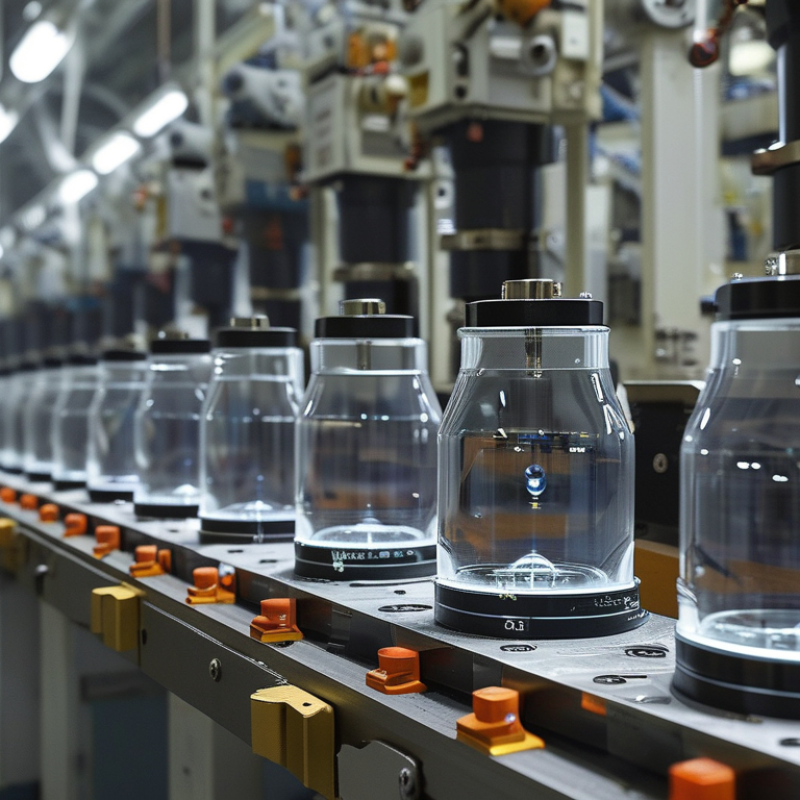
China’s automotive lens industry has changed from volume-focused molding to precision optical manufacturing. Earlier factories mainly produced simple lighting covers and basic camera windows. Today, many suppliers develop lenses for parking cameras, driver assistance systems, sensing modules, and smart lighting. The change is visible on the factory floor. Automated coating lines run beside inspection stations with blue-white light. Technicians check distortion, clarity, surface defects, and dimensional stability.

It is a demanding shift.

Modern production requires tighter tolerances, cleaner materials, and stronger process records. Suppliers increasingly use optical simulation, automated alignment, thermal cycling, and humidity testing before delivery. These practices help lenses remain stable during summer heat, winter cold, vibration, and repeated cleaning. Traceability has also improved. A production batch can often be linked to material data, machine settings, and inspection results.

However, progress is uneven. Some manufacturers still rely heavily on manual adjustment, especially during early product development. That can create inconsistent results. Quality teams must question attractive laboratory data and verify performance in real vehicles. Road dust, glare, rain, and installation errors may expose weaknesses that controlled testing misses. China’s leading automotive lens manufacturers are becoming more integrated, but engineering discipline still matters more than production scale.

Criteria for Ranking China’s Top 10 Automotive Lens Manufacturers

A credible China top 10 automotive lens ranking needs measurable criteria, not popularity or advertising claims. It should assess optical clarity, distortion control, light transmission, and image stability under vibration. The first filter is automotive quality management. I would request current certifications, process records, and independent test reports. Lab reports matter. Yet paperwork alone cannot prove reliable production. Factory audits should examine coating rooms, injection molding areas, clean storage, and final inspection stations. This distinction separates documented capability from real manufacturing experience.

Durability deserves equal weight. Automotive lenses face heat cycles, humidity, dust, road vibration, and sudden temperature changes. Ranking criteria should include test performance after repeated environmental exposure. Reviewers need evidence from sample batches, not one carefully selected unit. Production consistency can be checked through dimensional reports, defect rates, and optical sampling plans. A factory may produce excellent prototypes but struggle during mass delivery. That risk should reduce its position.

Commercial factors also influence a practical ranking. Suppliers should offer stable lead times, traceable materials, technical drawings, and responsive engineering support. Clear communication is essential when lens geometry changes. After-sales handling should be evaluated through corrective-action records and response speed. No ranking is perfect. A low defect rate can hide narrow testing standards. Therefore, the final list should combine factory visits, verified data, customer-use evidence, and repeated sample testing. Weighting must remain transparent, because different vehicle programs may value night vision, camera precision, or cost control differently.

Profiles of China’s Top 10 Automotive Lens Manufacturers

China’s top 10 automotive lens manufacturers represent a broad manufacturing network, from optical design studios to high-volume production plants. Their work covers camera lenses for advanced driver assistance systems, parking vision, surround-view cameras, and cabin monitoring. Many operate integrated laboratories for lens design, injection molding, coating, assembly, and image testing.

The strongest manufacturers usually control several critical steps in-house. Engineers measure distortion, flare, temperature stability, and low-light performance before shipment. A typical lens may face heat cycling, vibration, humidity, and dust exposure. Some factories also use automated alignment equipment, which helps maintain focus across thousands of units. Yet automation is not perfect. Small assembly errors can still affect sharpness near the image edge.

The leading companies differ in practical strengths. Some focus on compact lenses for crowded vehicle interiors. Others develop wide-angle systems for parking and side-view applications. Several invest in optical glass alternatives, lightweight polymers, and infrared transmission for night monitoring. Their reliability depends on more than specifications. Stable supply chains, traceable inspection records, and responsive engineering teams matter equally. Certification supports trust, but real vehicle testing reveals weaknesses that laboratory data can miss. This remains an area where manufacturers must keep improving.

How to Choose a Reliable Chinese Automotive Lens Supplier

Choosing a reliable Chinese automotive lens supplier requires more than reading a “Top 10” list. The China Association of Automobile Manufacturers reported 31.28 million vehicle units produced and 31.44 million sold in 2024. New-energy vehicle sales reached 12.87 million units. Camera demand is expanding quickly. MarketsandMarkets also projects steady growth in the global automotive camera market through 2028. This scale attracts many factories, but capacity claims need verification.

Request measured MTF, distortion, field-of-view, and coating data at several temperatures. Ask for thermal cycling, humidity, vibration, and salt-spray test records. A reliable supplier should explain its ISO 9001 or IATF 16949 system clearly. More importantly, inspect lot traceability, mold maintenance, incoming material controls, and engineering-change procedures. PPAP documents should match actual production samples, not only polished presentations.

Check pilot batches under day and night lighting. Inspect edge sharpness, flare, dust, scratches, and focus shift after heating. The cheapest quotation often hides unstable tooling or weak process control. That mistake is expensive. Supplier audits should include production floors, calibration records, and corrective-action history. Certificates alone are not enough. No checklist is perfect. A stronger decision combines test evidence, transparent communication, realistic lead times, and a small repeat order before full-volume production.

Our story

When The Light Went On

The idea for Acrospire was formed in 2012 when founder Tim envisioned a different kind of lighting manufacturer: one that would not only deliver outstanding customer experiences but also prioritise fair treatment for its employees.

We’ve come a long way

Working from any nook and cranny we could find

Motivated by the belief the industry wanted and needed better, Tim shared his plan to establish his own venture with Hatty, who simply couldn't let him do it alone.

The rest, as they say, is history.

Protecting local jobs and ensuring the best quality possible.

The products sold should, where possible be manufactured here in the UK

Working from a rented office by day and assembling lanterns in a garage at night, Tim and Hatty set to work.

11 Years later

and a lot has changed

Acrospire now inhabits a 14000² ft manufacturing facility in Basingstoke, Hampshire. We’re a proud partner of the Made in Britain scheme, ISO9001 certified and a member of all relevant lighting industry trade bodies.

We've built a reputation to be proud of

Along with great relationships with our customers and a great team! We've attracted some of the most experienced members of the lighting industry, all by following one golden rule.

A simple ethos

Creating work to be proud of

That runs through all that we do. Customers who have made the switch to Acrospire have found working with us to be a breath of fresh air.

Market leading warranty

If you’re a professional in the lighting industry, you’re probably familiar with warranties that range from 3 to 10 years, with extensions available on special request or at additional cost. At Acrospire, where we’re proud to be different, we offer a market-leading simple 12-year warranty, as standard.

Tight Control on Quality

We focus on our customers not our competition. We manufacture our products in the UK: with the exception of our solar products, our supply chain is within a 60-mile radius of our factory in Basingstoke: to maintain greater control over quality. We al

Speed is key

Speed of response is crucial when it comes to resolving warranty issues. If we’ve made a mistake, we own it, get to the root cause, and fix it as quickly as possible. We believe in timely communication with our customers and making the resolution pro

Test and Test Again

We believe in independent testing and certification. Our new product development is in line with ISO 9001. Many of our products hold ENEC Certification. To meet the requirements of ENEC we also send random product samples for third party safety testi

Quality by design

Our product design is another key factor in our ability to offer a 12-year warranty. We value engineer rather than cost cut, never compromising on quality. We stick to our processes and engage with our supply chain to ensure that every product meets