Top 10 Lighting Control Tips for Efficient Smart Homes?
In today's ever-evolving world of technology, Lighting Control has become a vital component of smart homes. Efficient lighting not only enhances aesthetics but also boosts energy savings. Homeowners now seek ways to seamlessly integrate lighting into their daily lives.
Adopting intelligent lighting systems can transform any space. These systems adjust based on time of day, occupancy, and mood. However, many people struggle with choosing the right setup. A common mistake is failing to consider individual needs and home layout. Each home is unique, and so should be its lighting strategy.
Understanding the nuances of Lighting Control allows homeowners to create a more personalized environment. Smart lighting can improve well-being and productivity. Yet, it requires thoughtful planning and execution. With the right tips, anyone can navigate the complexities of smart home lighting. These insights lead to a more enjoyable and functional living space.
Understanding Smart Lighting Control Systems
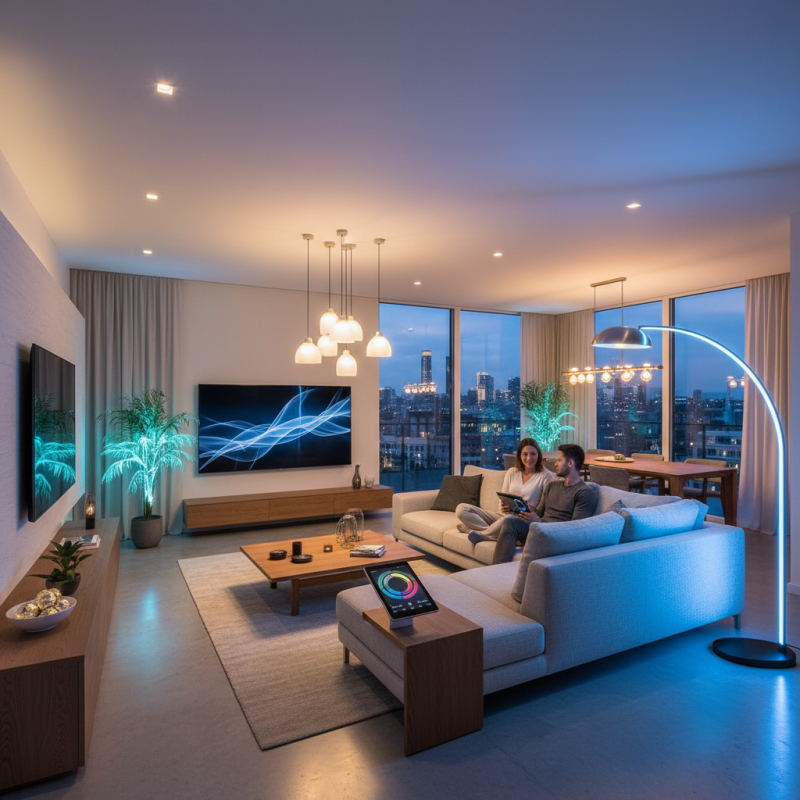
Smart lighting control systems are essential for modern homes. They bring convenience and efficiency. Understanding how to leverage these systems can dramatically enhance your living space. Voice controls and mobile apps allow for seamless management of lights. Imagine adjusting your home’s lighting with a simple command, or even automatically as you move through your space.
Installation of smart lighting requires some technical knowledge. It’s crucial to choose compatible devices. Not all smart bulbs or switches work well together. Users often overlook this detail, leading to frustrating experiences. Networking issues can arise, too. A weak Wi-Fi signal may result in unresponsive lighting systems. Regularly rebooting your system can sometimes resolve these minor hiccups.
Integrating sensors into your smart lighting can provide even more benefits. For example, motion sensors can activate lights when you enter a room. However, these sensors might have false triggers. One might find lights turning on unexpectedly in empty rooms. This could waste energy. Balancing automation with manual controls can help improve overall reliability.
Top 10 Lighting Control Tips for Efficient Smart Homes
This bar chart illustrates the importance rating of various smart lighting control tips for efficient smart homes. Each tip is rated on a scale of 1 to 10, showcasing how essential they are for optimizing lighting efficiency and user convenience.
Choosing the Right Smart Light Bulbs for Your Home
Choosing the right smart light bulbs is crucial for an efficient smart home. Start by evaluating your needs. Do you require bulbs that adjust brightness? Or do you prefer color-changing options? These features can contribute to energy savings and ambiance.
Consider the wattage and lumen output of each bulb. Energy-efficient LED bulbs often consume less power while providing ample light. Many smart bulbs can also be dimmed or customized through an app. This flexibility can lead to better control over home lighting, which is an essential aspect of comfort.
It's important to reflect on the long-term impacts of your choices. While smart bulbs may cost more upfront, their longevity and efficiency could save money over time. However, not every room needs smart lighting; some spaces may benefit from traditional bulbs instead. Adapting to the right lighting setup can sometimes take trial and error, so don’t hesitate to explore different options to find what truly works for your home.
Top 10 Lighting Control Tips for Efficient Smart Homes
| Tip Number | Tip | Description | Benefits |
| 1 | Choose LED Bulbs | Select energy-efficient LED lights. | Lower energy costs and longer lifespan. |
| 2 | Smart Switches | Install smart switches for control via app. | Increased convenience and automation. |
| 3 | Dimming Options | Use dimmable lights for flexible brightness. | Enhances mood and saves energy. |
| 4 | Voice Control | Integrate with voice assistants for hands-free control. | Increased accessibility and ease of use. |
| 5 | Schedule Lighting | Set schedules for lights to turn on/off automatically. | Enhanced security and energy savings. |
| 6 | Layered Lighting | Combine ambient, task, and accent lighting. | Creates a dynamic and functional space. |
| 7 | Scene Setting | Create scenes for different activities. | Easily adjust ambiance for any occasion. |
| 8 | Get Smart Sensors | Use motion sensors for automatic lighting. | Saves energy and adds convenience. |
| 9 | Wireless Control | Control lights from anywhere with a smartphone. | Enhanced control and flexibility. |
| 10 | Regularly Update Software | Keep devices updated for better performance. | Ensures security and functionality. |
Integrating Voice Assistants for Seamless Lighting Control
Integrating voice assistants into your smart home's lighting system can revolutionize your daily routines. By employing simple voice commands, you gain effortless control over your lights. Imagine walking into a room and saying, "Turn on the living room lights." Instantly, the ambiance shifts to meet your needs.
To enhance this experience, ensure your voice assistant is set up correctly. Create routines that combine multiple functions. For example, a "Movie Night" command could dim the lights and turn on your favorite streaming service. This type of integration provides not just convenience, but also a sense of luxury.
Another essential tip is to regularly check compatibility with your existing devices. Some voice assistants may not work well with all smart lighting systems. This could lead to frustration. Test different commands to find what works best for you. There’s always room for improvement in finding the most efficient approaches to suit your lifestyle.
Setting Up Smart Lighting Schedules for Energy Efficiency
Smart lighting schedules are essential for energy efficiency in modern homes. Proper scheduling can significantly reduce energy consumption. According to the U.S. Department of Energy, smart lighting systems can save homeowners up to 75% on lighting costs. Integrating these systems with your daily routines can maximize savings.
One effective tip is to set up timers. Turn lights on and off according to your daily activities. For instance, program outdoor lights to switch on at sunset and off at sunrise. This simple adjustment reduces unnecessary power use.
Another consideration is utilizing motion sensors. These sensors can disable lights when a room is unoccupied. Studies indicate that motion sensors can lower energy costs by 30%.
It's important to regularly review your lighting patterns. You may find that certain schedules no longer fit your lifestyle. Creating an adaptable schedule allows for flexibility while maintaining efficiency. Analyzing your usage metrics helps identify potential areas of waste. The sooner you adjust, the more energy you save.
Utilizing Motion Sensors to Optimize Lighting Usage
Motion sensors are transforming how we approach lighting in smart homes. These devices can detect movement and automatically adjust lights based on occupancy. This not only enhances convenience but also improves energy efficiency. Imagine walking into a room, and the lights illuminate without needing to flip a switch. This seamless integration creates an inviting atmosphere.
However, not all motion sensors are created equal. Placement is crucial for their effectiveness. If a sensor is positioned poorly, it may miss detecting movement entirely. Installing sensors too high can lead to reduced sensitivity. Additionally, the environment matters. If there are obstacles blocking the sensor's view, it may not function as intended. This trial-and-error phase can be frustrating.
It's essential to regularly evaluate the performance of these sensors. Are they activating when they should? Are they turning off too quickly? Fine-tuning these settings can lead to a better experience. Considering daylight sensors alongside motion detectors is also wise. This combination can optimize energy use, ensuring lights are only on when necessary. Balancing technology with practical insights is key to maximizing efficiency in your smart home lighting setup.