
shining bright

a British lighting manufacturer with a difference

Obsessed with solving problems, not just selling 'stuff': we were born from a belief that the lighting industry deserved better.

Top Li Polymer Battery Suppliers for Global Buyers

Choosing a dependable Li-Polymer battery supplier is a practical decision, not a simple price comparison. Global buyers must examine chemistry, cell design, production capacity, quality systems, and after-sales support. A supplier may offer attractive quotations, yet weak documentation can create costly delays later.

This guide introduces leading Li-Polymer battery suppliers serving international markets. It focuses on evidence that buyers can verify, including factory experience, certifications, testing procedures, sample consistency, and traceability. Product details matter. A battery’s voltage range, cycle life, discharge rate, dimensions, and protection circuit should match the intended device. Even a small connector error can stop a production line.

Reliability takes closer inspection.

Experienced suppliers usually provide clear technical datasheets, controlled manufacturing records, and practical engineering support. They can discuss custom sizes, minimum order quantities, packaging, transport conditions, and replacement procedures without vague promises. Buyers should also review independent test reports where available and confirm whether certifications apply to the exact battery model. Compliance requirements vary by destination and application, so assumptions are risky.

No supplier is perfect. Communication can still fail, lead times can change, and early samples may not reflect mass production. That is why a careful evaluation should include pilot orders, written specifications, inspection checkpoints, and realistic delivery planning. The companies discussed here are assessed through a buyer-focused lens, combining market reputation with operational details. The goal is not to praise every supplier equally, but to help global purchasers ask better questions before committing money, time, and product reliability.

Top Li Polymer Battery Suppliers for Global Buyers

What Defines a Reliable Lithium Polymer Battery Supplier

Top Li Polymer Battery Suppliers for Global Buyers

A reliable lithium polymer battery supplier proves performance before discussing price. The supplier should provide cell-level test records, not only a polished product sheet. Capacity, internal resistance, swelling rate, cycle life, and discharge performance need clear test conditions. Small differences matter.

A 2024 BloombergNEF Battery Price Survey reported average lithium-ion pack prices of $115 per kWh, down 20% from 2023. However, lower market prices can pressure quality controls. Buyers should ask how production savings affect materials, inspection, and warranty support.

Traceability is another defining factor. Reliable suppliers identify electrode batches, electrolyte processes, and final inspection records. They should also support testing aligned with IEC 62133-2 and transport requirements under UN 38.3. The International Energy Agency reported that global battery manufacturing capacity exceeded demand in 2023. This creates more sourcing options, but capacity alone proves little. A factory tour, sample audit, and independent laboratory report reveal more than stated output.

Experience appears during difficult conversations. Strong suppliers explain thermal limits, storage conditions, and realistic cycle-life results. They do not promise perfect performance. I would question any supplier claiming identical results across every device.

Polymer cells can react differently to enclosure pressure, charging profiles, and operating temperatures. That detail is often overlooked. Buyers should document approval samples, change-control rules, and response times before placing volume orders. Reliability is not a slogan; it is visible in records, testing discipline, and honest limitations.
Key Regions and Manufacturing Hubs for Li Polymer Batteries

Li polymer battery manufacturing is concentrated where materials, engineering talent, and export infrastructure meet. China remains a major hub, with dense supply chains for aluminum pouches, separators, electrodes, and protection circuits. Shenzhen, Dongguan, and the Yangtze River Delta support flexible volumes, from small wearable cells to larger industrial packs. Supplier quality varies widely. A low price may hide weak formation control or inconsistent moisture management.

South Korea and Japan are known for disciplined process control, advanced coating equipment, and strong laboratory practices. Their facilities often serve automotive, medical, and high-reliability electronics markets. Taiwan adds strength in compact electronics and precision assembly. Buyers should inspect dry-room dew points, electrode thickness records, cell matching data, and aging procedures. These details reveal more than a polished factory tour. Ask for recent test reports, not only certificates.

Europe and North America are expanding local capacity near automotive and energy-storage clusters. These sites can simplify logistics and technical support, but their costs are usually higher. Regional production does not automatically mean better cells. Procurement teams should compare yield data, warranty handling, and traceability across production lots. Some suppliers still provide incomplete cycle-life evidence. That deserves careful questioning. A practical sourcing plan may combine regional assembly with qualified overseas cell production, depending on volume, risk, and delivery needs.

How Global Buyers Should Evaluate Battery Suppliers

Global buyers should evaluate Li-polymer battery suppliers through evidence, not attractive product pages. Request detailed datasheets for every proposed cell or battery pack. Check nominal voltage, usable capacity, test current, cycle-life cutoff, operating temperature, and permitted charge rate. Ask whether the results represent production cells or laboratory samples. That distinction matters. Require batch numbers, material traceability, and clear revision histories for technical documents. Small omissions can create expensive surprises during certification or field testing.

Safety evidence deserves close attention. Ask for current reports covering transport, electrical, and abuse testing. Documents should identify the tested model, sample quantity, test conditions, and issuing laboratory. Verify factory controls for cell matching, welding quality, insulation, charging protection, and final inspection. A remote or on-site audit can reveal more than a sales presentation. Review incoming inspection records, defect handling, calibration logs, and production-change procedures. Do not rely on one successful sample. Batch variation happens. Confirm import documents and applicable requirements for your destination market, including transport test documentation and relevant battery safety standards.

Commercial terms can expose supplier reliability. Compare minimum order quantities, lead times, warranty exclusions, replacement procedures, and payment milestones. Clarify who owns design changes and who pays for corrective action. For custom packs, approve a golden sample, then test random units from later batches. Independent testing is worth the cost when the application is safety-critical. Supplier reviews often focus too heavily on price. I would leave room for uncertainty and demand written answers. The cheapest quote can become expensive when a weak batch delays certification, installation, or customer delivery.

Certifications, Quality Control, and Safety Requirements

Global buyers should assess lithium polymer battery suppliers through documented certifications and daily manufacturing evidence. UN 38.3 testing supports safer transport, while IEC 62133-2 addresses portable battery safety. Depending on the product, UL 1642 or UL 2054 may also apply. ISO 9001 certification can indicate a controlled quality system, but it does not guarantee perfect batteries.

Ask for current certificates, test reports, safety data sheets, and traceable production records. Dates matter. So do issuing laboratories and tested cell models. A reliable supplier should explain whether certification covers the exact battery design, not merely a similar product. This small detail is often overlooked.

Quality control should be visible on the factory floor. Incoming cells need checks for voltage, capacity, dimensions, and internal resistance. During assembly, operators should verify welding strength, insulation, polarity, and protection-circuit function. Finished packs require charging, discharging, aging, and sampling tests. Labels and carton markings must match shipping documents. Safety improves when every batch has a traceable code.

Ask how the supplier handles swelling, damaged cells, failed tests, and customer complaints. Their corrective-action records may reveal more than a polished certificate. Audits also have limits; one visit cannot represent every production shift. I would request recent batch data and retain independent samples for confirmation. No process is flawless, and honest suppliers should acknowledge that weakness.

Ordering, Customization, and International Supply Considerations

Choosing a lithium polymer battery supplier requires more than comparing unit prices. Buyers should request recent test reports, safety data, capacity tolerances, and production records. A reliable supplier can explain whether the quoted capacity is nominal or tested at a specific discharge rate. Ask for samples before approving a large order. Small differences in connector position or battery thickness can disrupt an entire assembly line.

Customization usually involves more than changing the label. Suppliers may adjust dimensions, wire length, connector type, protection circuits, and packaging. Share a clear drawing with tolerances and installation photographs. Confirm the sample through charge, discharge, temperature, and cycle testing. Tooling charges and minimum order quantities should be written into the quotation. A cheaper prototype can become expensive after repeated revisions. This is easy to underestimate.

International ordering also requires careful document control. Confirm applicable transport classifications, UN 38.3 test evidence, safety documents, carton markings, and export paperwork before shipment. Agree on Incoterms, payment stages, inspection rights, and responsibility for damaged cargo. Lead times should include material procurement, production, testing, customs clearance, and delivery. For urgent projects, keep a small safety stock near the assembly site. It costs more, but production delays cost more. I would still challenge every promised delivery date, because optimistic schedules are common. Temperature exposure during storage deserves attention too. A battery may arrive on time, yet perform poorly after months in an overheated warehouse.

Top Li-Polymer Battery Suppliers for Global Buyers

Common technical and compliance checkpoints for international Li-polymer battery orders. Values reflect widely used industry specifications and shipping requirements rather than company-specific data.

Most rechargeable Li-polymer cells use a nominal voltage of approximately 3.7 V and a 4.2 V full-charge voltage. International shipments commonly require UN 38.3 transport testing, while product safety documentation may reference IEC 62133-2. Buyers should also confirm capacity, dimensions, protection circuitry, minimum order quantity, lead time, and destination-country import rules.

Our story

When The Light Went On

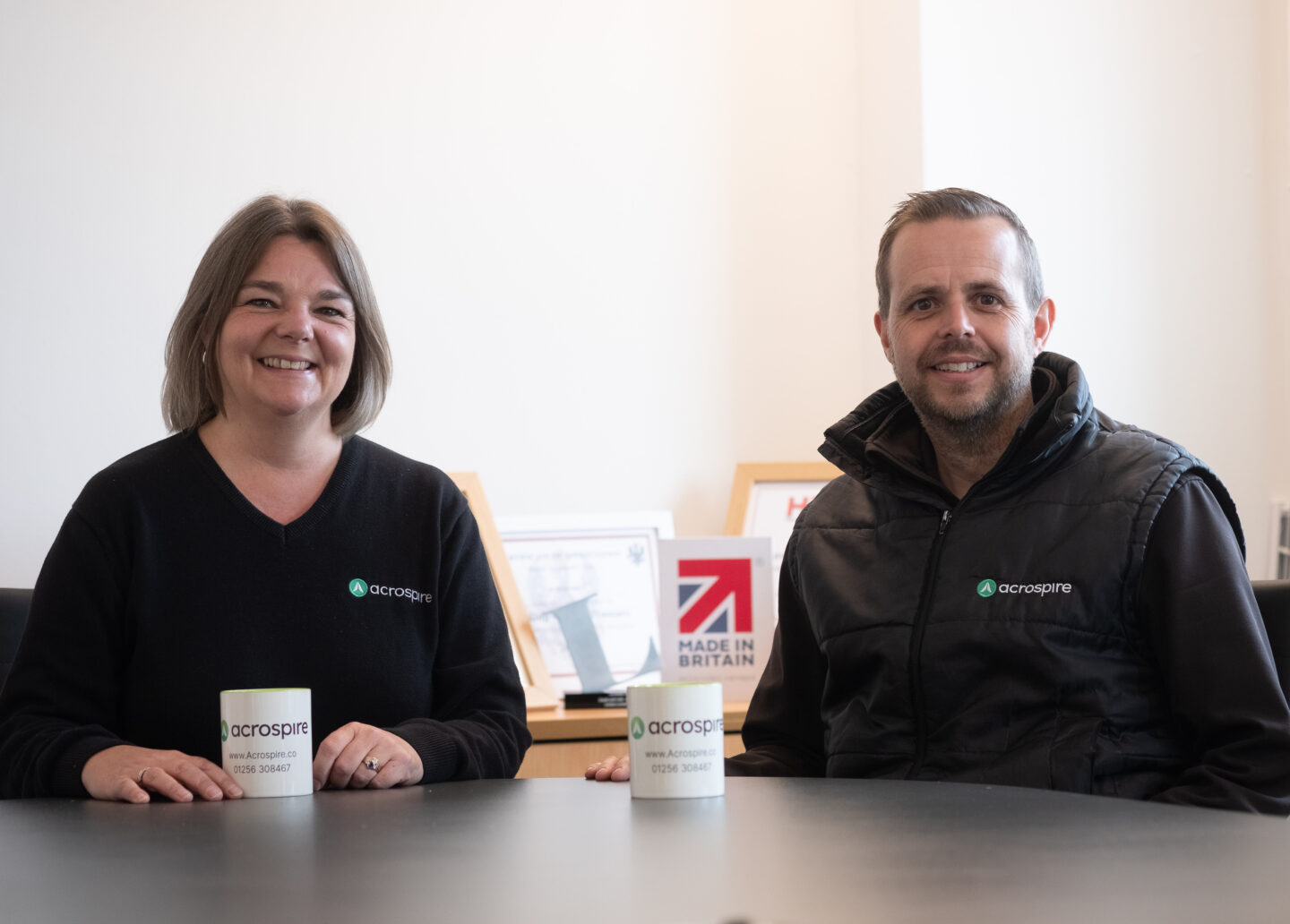
The idea for Acrospire was formed in 2012 when founder Tim envisioned a different kind of lighting manufacturer: one that would not only deliver outstanding customer experiences but also prioritise fair treatment for its employees.

We’ve come a long way

Working from any nook and cranny we could find

Motivated by the belief the industry wanted and needed better, Tim shared his plan to establish his own venture with Hatty, who simply couldn't let him do it alone.

The rest, as they say, is history.

Protecting local jobs and ensuring the best quality possible.

The products sold should, where possible be manufactured here in the UK

Working from a rented office by day and assembling lanterns in a garage at night, Tim and Hatty set to work.

11 Years later

and a lot has changed

Acrospire now inhabits a 14000² ft manufacturing facility in Basingstoke, Hampshire. We’re a proud partner of the Made in Britain scheme, ISO9001 certified and a member of all relevant lighting industry trade bodies.

We've built a reputation to be proud of

Along with great relationships with our customers and a great team! We've attracted some of the most experienced members of the lighting industry, all by following one golden rule.

A simple ethos

Creating work to be proud of

That runs through all that we do. Customers who have made the switch to Acrospire have found working with us to be a breath of fresh air.

Market leading warranty

If you’re a professional in the lighting industry, you’re probably familiar with warranties that range from 3 to 10 years, with extensions available on special request or at additional cost. At Acrospire, where we’re proud to be different, we offer a market-leading simple 12-year warranty, as standard.

Tight Control on Quality

We focus on our customers not our competition. We manufacture our products in the UK: with the exception of our solar products, our supply chain is within a 60-mile radius of our factory in Basingstoke: to maintain greater control over quality. We al

Speed is key

Speed of response is crucial when it comes to resolving warranty issues. If we’ve made a mistake, we own it, get to the root cause, and fix it as quickly as possible. We believe in timely communication with our customers and making the resolution pro

Test and Test Again

We believe in independent testing and certification. Our new product development is in line with ISO 9001. Many of our products hold ENEC Certification. To meet the requirements of ENEC we also send random product samples for third party safety testi

Quality by design

Our product design is another key factor in our ability to offer a 12-year warranty. We value engineer rather than cost cut, never compromising on quality. We stick to our processes and engage with our supply chain to ensure that every product meets