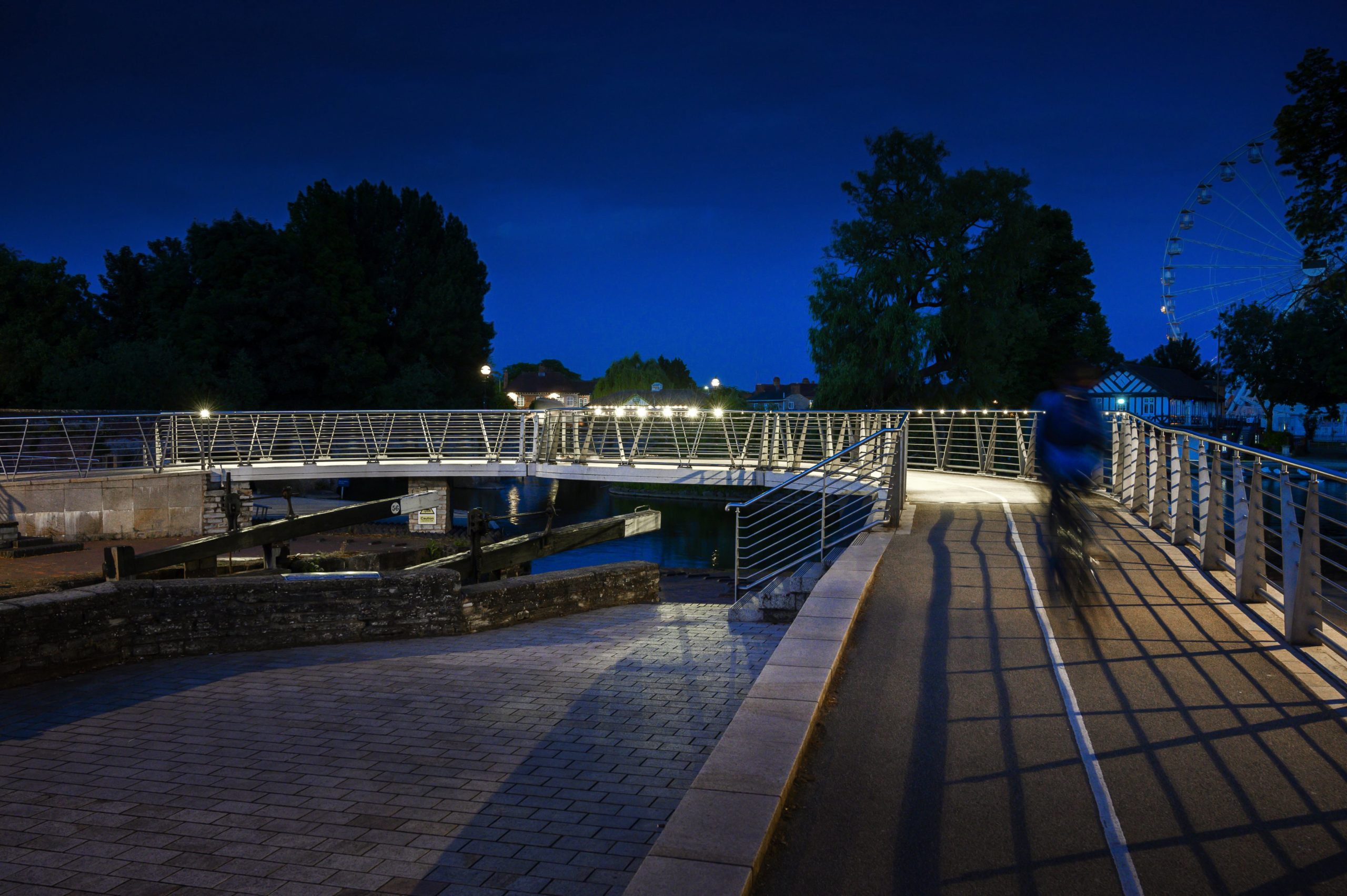
shining bright

a British lighting manufacturer with a difference

Obsessed with solving problems, not just selling 'stuff': we were born from a belief that the lighting industry deserved better.

What Is Computer Graphic Animation and How Does It Work?

Computer Graphic Animation brings still digital objects to life through carefully controlled movement. It can show a glass bottle rotating, a character blinking, or a city changing across decades. Unlike traditional hand-drawn animation, it relies on mathematical models, digital scenes, and computer-generated images. The result may look effortless. It rarely is.

At its core, the process begins with geometry. Artists build objects from points, edges, and surfaces called polygons. They then add materials, colors, textures, cameras, and lights. Keyframes define important poses or positions, such as a car stopping at a crosswalk. Software calculates the movement between those moments. This process is called interpolation. A renderer then converts the scene into pixels, often one frame at a time. Shadows, reflections, motion blur, and atmospheric effects can make the image feel physical.

The technology is powerful, but it does not guarantee believable animation. A character may move accurately and still appear emotionally empty. A bright surface may look attractive but ignore real lighting behavior. These weaknesses matter because audiences notice unnatural timing, weight, and facial motion quickly. This guide explains how Computer Graphic Animation works, from modeling and rigging to rendering and compositing. It also considers where professional judgment remains essential. Software can calculate movement. Artists decide whether that movement communicates meaning. The distinction is easy to miss. Good animation needs both.

What Is Computer Graphic Animation and How Does It Work?

Defining Computer Graphics Animation: 2D, 3D, and Motion Data

Computer graphics animation creates the illusion of movement by changing visual information over time. In 2D animation, artists arrange flat drawings, shapes, or digital layers on a two-dimensional plane. Each frame may alter a character’s mouth, a shadow, or a background object. It looks effortless. However, timing remains demanding. A few extra frames can make movement feel heavy, while too few can make it abrupt. Practical testing often reveals problems that planning misses.

3D animation builds objects inside a virtual space using geometry, materials, cameras, and lights. Artists create keyframes for important poses, such as a hand reaching forward or a ball touching the ground. Software calculates the frames between those poses through interpolation. This process saves time, but it does not guarantee natural motion. Animators still adjust curves, weight, balance, and facial expressions. A digital character needs more than a moving skeleton.

Motion data describes movement as numerical information. It can come from keyframe curves, sensors, or video tracking. The data may record joint rotation, body position, camera paths, or object speed. When applied to a 3D rig, it can produce detailed human movement quickly. Yet raw data often includes shaking, timing errors, or unwanted collisions. It can still look wrong. Careful cleanup and artistic judgment remain essential. In practice, the strongest results combine measurable motion with deliberate visual choices, although that balance is rarely perfect.

Creating Motion with Keyframes at 24, 30, or 60 Frames per Second

Computer graphic animation creates the illusion of movement by changing images over time. Animators place keyframes at important moments, such as a hand rising or a ball touching the floor. Software generates the frames between those points through interpolation. These in-between frames shape rhythm, weight, and emotional clarity. Timing changes everything.

At 24 frames per second, motion often feels cinematic and slightly expressive. Each second contains 24 individual images. At 30 frames per second, movement usually appears a little smoother and suits clear instructional or broadcast content. At 60 frames per second, fast actions show more detail, including a turning wheel or a falling splash. However, a higher frame rate does not automatically create better animation. It can expose weak timing and unnecessary keyframes.

The distance between keyframes controls acceleration and deceleration. Close keyframes create quick changes, while wider gaps allow slower movement. Animators often review the graph editor, adjust curves, and test playback repeatedly. A technically correct sequence can still feel lifeless. I sometimes over-polish small motions and lose the main action. That mistake is useful because it reveals whether the poses communicate clearly. Realistic motion also needs restraint; not every frame should contain dramatic change. A slight delay in a shoulder or hand can make a digital character feel more believable.

Building 3D Scenes: Modeling, Rigging, Texturing, and Lighting

What Is Computer Graphic Animation and How Does It Work?

Building 3D Scenes: Modeling, Rigging, Texturing, and Lighting

Computer graphic animation turns digital geometry into moving images. A 3D scene begins with modeling, where artists shape polygons into characters, rooms, vehicles, or tiny props. My practical experience suggests that clean topology matters more than visual detail. Poor edge flow can make a shoulder collapse during movement. It happens often.

Rigging adds a digital skeleton beneath the model. Artists place joints, controls, and deformation rules so a character can bend naturally. A well-built rig saves hours during revisions, but it cannot fix careless modeling. Animation then defines movement through keyframes, timing, spacing, and physical weight. The U.S. Bureau of Labor Statistics projects 8% employment growth for special effects artists and animators from 2022 to 2032, showing continued demand for these skills. Lighting completes the scene by controlling mood, depth, and attention. Professional production reports also identify real-time 3D workflows as a growing part of visual content creation, although adoption varies between studios.

Tips: Test a simple walk cycle before adding hair or accessories. Use neutral lighting while checking textures. Keep material roughness believable; perfect surfaces often look artificial. Save versions after every major change. Reflection helps: a technically correct scene may still feel emotionally empty.

Rendering Animation with Rasterization, Ray Tracing, and GPUs

What Is Computer Graphic Animation and How Does It Work?

Computer graphic animation creates movement by changing digital images over time. Each frame contains objects, colors, lighting, and camera information. Rendering converts this scene data into visible pixels. The process may look instant, but complex scenes can require careful calculations.

Rasterization projects three-dimensional shapes onto a two-dimensional screen. It quickly fills triangles with colors, textures, and shadows. This method is efficient for interactive animation and large sequences. However, reflections and soft lighting may appear simplified. Ray tracing follows simulated light paths from the camera into the scene. It can produce realistic reflections, glass, and natural shadows. The trade-off is heavier computation and longer rendering times. Modern graphics processors divide these calculations across thousands of smaller units. This parallel work helps generate smooth motion, although optimization still matters.

A practical workflow often uses rasterization for previews and ray tracing for final shots. Keep geometry efficient. Small details can become expensive quickly. Check lighting on ordinary frames, not only dramatic scenes. A beautiful test image may hide flickering shadows between frames. I have found that reducing unnecessary reflections often improves consistency more than adding more detail. That choice feels imperfect, but reliable animation depends on stability. Test short sections before rendering a full sequence. Watch edges, moving shadows, and transparent surfaces closely. These areas usually reveal technical problems first.

Compositing and Delivering Frames in 4K UHD (3,840 × 2,160)

What Is Computer Graphic Animation and How Does It Work?

Compositing and Delivering Frames in 4K UHD (3,840 × 2,160)

Computer graphic animation builds images from modeled objects, lighting, movement, and rendered frames. Each frame becomes one piece of a moving visual sequence. In 4K UHD, every frame contains 3,840 horizontal pixels and 2,160 vertical pixels. That detail reveals tiny mistakes, including uneven edges, soft textures, and mismatched shadows.

Compositing combines rendered layers with backgrounds, effects, color adjustments, and depth information. A practical workflow usually preserves transparent alpha channels during this stage. Artists check edges at full resolution, especially around hair, glass, smoke, and fast movement. I have found that a clean layer structure makes revisions safer and faster. It also exposes problems earlier. Sometimes, an edge still looks artificial after several passes. That requires judgment, not another automatic filter.

Delivery begins with technical checks. The frame rate must match the approved timeline. Color management should preserve accurate brightness and skin tones across viewing systems. Editors inspect image sequences for missing frames, flicker, compression damage, and audio alignment. A 4K master may use a high-quality mezzanine format before creating smaller viewing copies. File naming matters more than expected. One wrong number can interrupt an entire delivery. I still recommend watching the complete export, not only checking individual frames. A short test may pass while a longer sequence reveals drifting color or repeated frames.

Our story

When The Light Went On

The idea for Acrospire was formed in 2012 when founder Tim envisioned a different kind of lighting manufacturer: one that would not only deliver outstanding customer experiences but also prioritise fair treatment for its employees.

We’ve come a long way

Working from any nook and cranny we could find

Motivated by the belief the industry wanted and needed better, Tim shared his plan to establish his own venture with Hatty, who simply couldn't let him do it alone.

The rest, as they say, is history.

Protecting local jobs and ensuring the best quality possible.

The products sold should, where possible be manufactured here in the UK

Working from a rented office by day and assembling lanterns in a garage at night, Tim and Hatty set to work.

11 Years later

and a lot has changed

Acrospire now inhabits a 14000² ft manufacturing facility in Basingstoke, Hampshire. We’re a proud partner of the Made in Britain scheme, ISO9001 certified and a member of all relevant lighting industry trade bodies.

We've built a reputation to be proud of

Along with great relationships with our customers and a great team! We've attracted some of the most experienced members of the lighting industry, all by following one golden rule.

A simple ethos

Creating work to be proud of

That runs through all that we do. Customers who have made the switch to Acrospire have found working with us to be a breath of fresh air.

Market leading warranty

If you’re a professional in the lighting industry, you’re probably familiar with warranties that range from 3 to 10 years, with extensions available on special request or at additional cost. At Acrospire, where we’re proud to be different, we offer a market-leading simple 12-year warranty, as standard.

Tight Control on Quality

We focus on our customers not our competition. We manufacture our products in the UK: with the exception of our solar products, our supply chain is within a 60-mile radius of our factory in Basingstoke: to maintain greater control over quality. We al

Speed is key

Speed of response is crucial when it comes to resolving warranty issues. If we’ve made a mistake, we own it, get to the root cause, and fix it as quickly as possible. We believe in timely communication with our customers and making the resolution pro

Test and Test Again

We believe in independent testing and certification. Our new product development is in line with ISO 9001. Many of our products hold ENEC Certification. To meet the requirements of ENEC we also send random product samples for third party safety testi

Quality by design

Our product design is another key factor in our ability to offer a 12-year warranty. We value engineer rather than cost cut, never compromising on quality. We stick to our processes and engage with our supply chain to ensure that every product meets