
shining bright

a British lighting manufacturer with a difference

Obsessed with solving problems, not just selling 'stuff': we were born from a belief that the lighting industry deserved better.

How to Choose Stone Composite Flooring in 2026?

Choosing a Stone Composite Floor in 2026 requires more than comparing colors, prices, and online ratings. The right decision begins with the room itself. A busy kitchen, sunlit hallway, and quiet bedroom create different flooring demands. Examine moisture exposure, subfloor condition, foot traffic, and cleaning habits before selecting a product.

Look closely at the construction. Ask manufacturers for the core composition, wear-layer thickness, surface treatment, slip-resistance data, and indoor air-quality certifications. Reliable technical documents matter more than impressive marketing phrases. Request samples, then place them beside cabinets and windows. A gray finish can appear blue under cool lighting. Small details matter.

Installation experience also deserves attention. Qualified installers can identify uneven subfloors, expansion requirements, and transition problems before they become expensive repairs. Check the warranty carefully, especially its exclusions for moisture, fading, and commercial use. Independent testing can support manufacturer claims, but no certification replaces proper installation.

There is no perfect floor.

Some products look luxurious yet feel harsh underfoot. Others resist scratches well but show dust quickly. I have seen attractive samples fail to match real rooms because lighting and furniture changed the visual balance. That possibility should encourage careful testing, not rushed purchasing. This guide explains how to compare performance, maintenance, cost, sustainability, and long-term suitability when choosing stone composite flooring in 2026. Reliable choices come from evidence, practical observation, and honest awareness of each product’s limitations.
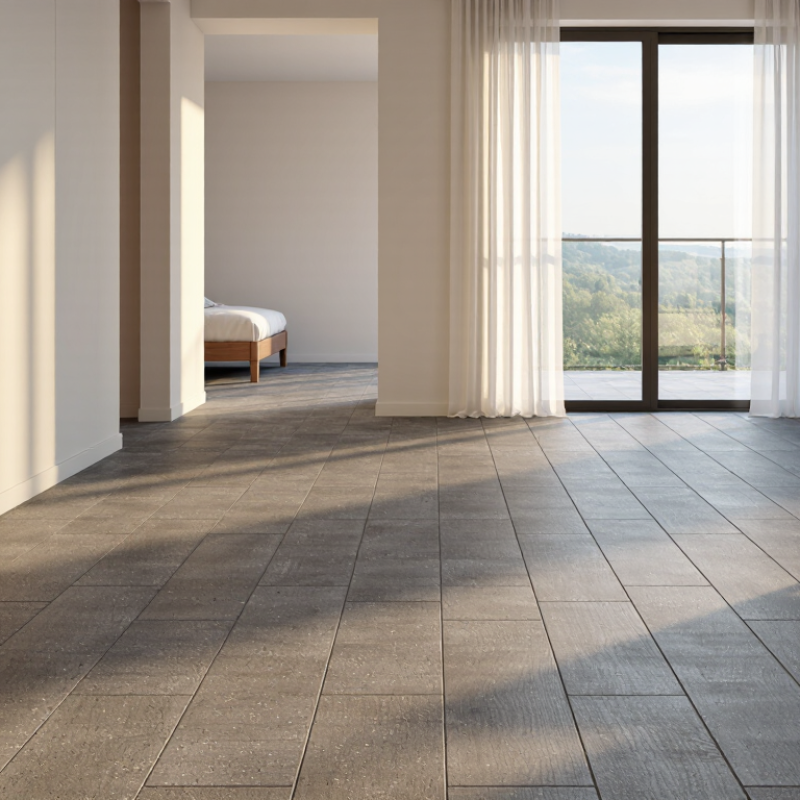
How to Choose Stone Composite Flooring in 2026?

Define Stone Composite Flooring and Its Main Types

Stone composite flooring is a rigid floor product made with mineral powder, polymer resin, stabilizers, and a decorative surface. Its dense core gives the plank a firm feel underfoot. Many products also include a transparent wear layer and attached underlayment. In site inspections, edge quality often matters more than showroom appearance.

The main type is SPC, or stone plastic composite, which commonly uses limestone powder and PVC. It offers strong dimensional stability and resists everyday moisture. Mineral-core flooring uses a higher mineral content and may feel more solid, but it can be less forgiving over uneven subfloors. Some suppliers also sell hybrid stone-polymer boards with enhanced acoustic layers. These categories overlap, so product labels deserve careful reading.

Grand View Research valued the global flooring market at approximately US$458 billion in 2023. Its report also identified renovation and durable residential materials as important growth factors. That trend explains the interest in rigid composite floors, but growth is not proof of quality. ASTM and ISO test results provide better evidence than marketing language.

Tips: Check the core composition, wear-layer thickness, locking profile, and moisture rating. Ask for test reports, not only sample boards. A thicker plank is not automatically stronger. Compare expansion gaps, subfloor flatness requirements, and room temperature conditions. I would also inspect one installed row before ordering the full quantity. Small defects become obvious near windows.

Compare Core Materials, Surface Layers, and Structural Performance

How to Choose Stone Composite Flooring in 2026?

Stone composite flooring should be judged by its core, not its printed stone texture. SPC cores use mineral filler and PVC, creating a dense, rigid board. They resist indentation well but can feel cold underfoot. WPC cores contain foamed material, so they feel warmer and reduce footfall noise. However, softer cores may dent under narrow furniture legs. Mineral-core products vary widely, so check the binder and density instead of trusting the word “stone.” Grand View Research valued the global flooring market at about USD 437 billion in 2023, showing strong demand, but market growth does not prove durability.

The surface layer controls daily wear. A thicker transparent wear layer usually offers better protection, yet thickness alone can mislead. Look for abrasion, stain, slip, and light-resistance test results. ASTM F3261 and ISO 10582 provide useful performance references, although they do not replace product-specific testing. A polyurethane finish may simplify cleaning. Textured embossing can improve grip, but deep grooves collect dust quickly. Small detail, big maintenance difference.

Structural performance depends on more than the plank. Check locking strength, dimensional stability, and permitted subfloor unevenness. The European Commission’s 2023 Product Environmental Footprint guidance also encourages life-cycle comparison, including raw materials and replacement frequency. I would measure the room temperature and moisture before installation. I would not assume waterproof means installation-proof. Even rigid flooring can separate over an uneven subfloor. That remains an easy mistake.

Match Flooring Specifications to Room Conditions and Usage

How to Choose Stone Composite Flooring in 2026?

Stone composite flooring should match the room, not simply the product photograph. In a busy hallway, check the wear-layer thickness and abrasion rating. Mud, grit, and wheeled shoes can damage weak surfaces quickly. Choose a textured, slip-resistant finish near entrances and kitchens. It feels safer after rain. For bathrooms, confirm water resistance for the flooring and its joints. Waterproof boards cannot prevent moisture damage beneath poorly sealed edges.

Room temperature also affects installation. Measure subfloor moisture before laying boards over concrete. Uneven floors may cause clicking sounds or joint stress later. A rigid core helps, but it cannot correct every base problem.

In sunny rooms, review dimensional stability and fitting gaps. Direct heat can expose weak locking systems. Underfloor heating needs written temperature limits, not guesswork. Follow the installation guidance carefully.

Usage should guide thickness, underlay, and maintenance needs. A quiet bedroom may need better acoustic support than a storage room. In a home office, test whether chair wheels roll smoothly without scratching the surface. I once assumed a thicker board was automatically better. It was not; the underlay and subfloor mattered more. Take samples home. View them beside wet boots, furniture legs, and afternoon sunlight. Small tests reveal flaws that showroom lighting can hide.

Evaluate Safety, Sustainability, Installation, and Maintenance Needs

Choosing stone composite flooring in 2026 requires more than comparing colors and prices. Safety should lead the assessment. Check slip resistance data for dry and wet conditions, especially near entrances, kitchens, and bathrooms. Ask for formal testing, not vague “anti-slip” claims. Confirm low emissions, stable surface temperatures, and edge profiles that reduce trips. A sample under bright light can reveal glare and uneven texture.

Sustainability depends on the entire life cycle. Review recycled content, manufacturing disclosures, and end-of-life guidance. A durable floor may create less waste, but only when its core and wear layer remain stable. Measure rooms carefully before ordering. Poor estimates can leave unusable offcuts. That is easy to overlook. I once saw a renovation lose several boxes through rushed cutting plans.

Installation should match the subfloor, room moisture, and expected traffic. The base must be clean, level, and dry. Follow acclimation and expansion requirements. A qualified installer should record moisture readings and explain each preparation step. Maintenance is usually simple: sweep grit, wipe spills quickly, and use neutral cleaners approved for composite surfaces. Avoid abrasive pads and standing water. Inspect joints every few months. Small movement may signal a subfloor problem, not a flooring defect. Keep product documents, test reports, and cleaning instructions. Real homes are messier than showroom tests.

Set a Budget and Verify Product Quality Before Buying

Set a realistic budget before comparing stone composite flooring. Include flooring, underlayment, trims, delivery, installation, and waste. A 5–10% allowance is sensible for cutting and damaged boards. Grand View Research estimated the global stone plastic composite flooring market at about USD 4.18 billion in 2023, with strong growth expected through 2030. That growth creates more choices, but not always better value.

Do not judge quality by thickness alone. Check the wear layer, core density, locking strength, and dimensional stability. Ask for independent test reports, not only product brochures. ASTM F2199 can support dimensional stability claims, while ISO 16000-6 testing can indicate volatile organic compound emissions. Slip resistance and fire-performance reports also matter, especially in kitchens, entrances, and commercial rooms. The exact test method should match your local building requirements.

Measure twice. Do not guess.

A practical budget comparison should calculate cost per installed square metre. A cheaper board may need more leveling work or replacement later. I have found that glossy samples can hide uneven textures under strong lighting. That is an easy mistake. Request a full-size sample, place it beside a window, and inspect the joints after heating and cooling. Product quality still needs verification. Even good specifications cannot fix poor subfloor preparation.

Our story

When The Light Went On

The idea for Acrospire was formed in 2012 when founder Tim envisioned a different kind of lighting manufacturer: one that would not only deliver outstanding customer experiences but also prioritise fair treatment for its employees.

We’ve come a long way

Working from any nook and cranny we could find

Motivated by the belief the industry wanted and needed better, Tim shared his plan to establish his own venture with Hatty, who simply couldn't let him do it alone.

The rest, as they say, is history.

Protecting local jobs and ensuring the best quality possible.

The products sold should, where possible be manufactured here in the UK

Working from a rented office by day and assembling lanterns in a garage at night, Tim and Hatty set to work.

11 Years later

and a lot has changed

Acrospire now inhabits a 14000² ft manufacturing facility in Basingstoke, Hampshire. We’re a proud partner of the Made in Britain scheme, ISO9001 certified and a member of all relevant lighting industry trade bodies.

We've built a reputation to be proud of

Along with great relationships with our customers and a great team! We've attracted some of the most experienced members of the lighting industry, all by following one golden rule.

A simple ethos

Creating work to be proud of

That runs through all that we do. Customers who have made the switch to Acrospire have found working with us to be a breath of fresh air.

Market leading warranty

If you’re a professional in the lighting industry, you’re probably familiar with warranties that range from 3 to 10 years, with extensions available on special request or at additional cost. At Acrospire, where we’re proud to be different, we offer a market-leading simple 12-year warranty, as standard.

Tight Control on Quality

We focus on our customers not our competition. We manufacture our products in the UK: with the exception of our solar products, our supply chain is within a 60-mile radius of our factory in Basingstoke: to maintain greater control over quality. We al

Speed is key

Speed of response is crucial when it comes to resolving warranty issues. If we’ve made a mistake, we own it, get to the root cause, and fix it as quickly as possible. We believe in timely communication with our customers and making the resolution pro

Test and Test Again

We believe in independent testing and certification. Our new product development is in line with ISO 9001. Many of our products hold ENEC Certification. To meet the requirements of ENEC we also send random product samples for third party safety testi

Quality by design

Our product design is another key factor in our ability to offer a 12-year warranty. We value engineer rather than cost cut, never compromising on quality. We stick to our processes and engage with our supply chain to ensure that every product meets