shining bright

a British lighting manufacturer with a difference

Obsessed with solving problems, not just selling 'stuff': we were born from a belief that the lighting industry deserved better.

10 Best Outdoor Lighting Products for Global Buyers

Choosing outdoor lighting for international projects requires more than comparing brightness and price. Climate, wiring standards, energy use, installation methods, and after-sales support can change the real value of a product. A lamp that performs well beside a dry garden may fail near salty coastal air. Small details matter, such as sealed connectors, corrosion-resistant housings, stable mounting bases, and readable voltage information.

Lighting expert James Benya offers a useful principle: “Good lighting is not about how much light you have, but where you put it.” This idea guides our selection of the 10 best outdoor lighting products for global buyers. Each option should balance practical performance with visual comfort. Warm light can make a patio feel welcoming. Shielded beams can reduce glare across a neighbor’s window. Motion sensors may improve safety, but poor settings can cause annoying flashes throughout the night.

Real-world conditions are rarely perfect. Some products advertise long lifespans, yet performance may depend on heat, moisture, cleaning, and installation quality. Buyers should question broad claims. Check certifications, warranty terms, lumen maintenance, color temperature, and replacement availability. Also consider local regulations and qualified installation where required.

This guide examines outdoor lighting products for homes, hospitality spaces, pathways, entrances, and gardens. It does not treat one specification as universally superior. A compact solar fixture may suit a remote walkway, while a professionally wired LED system may better serve a large property. The right choice depends on place, purpose, budget, and maintenance expectations. Sometimes, less light creates the safer and more attractive result.
10 Best Outdoor Lighting Products for Global Buyers

Outdoor Lighting Categories and Their Main Applications

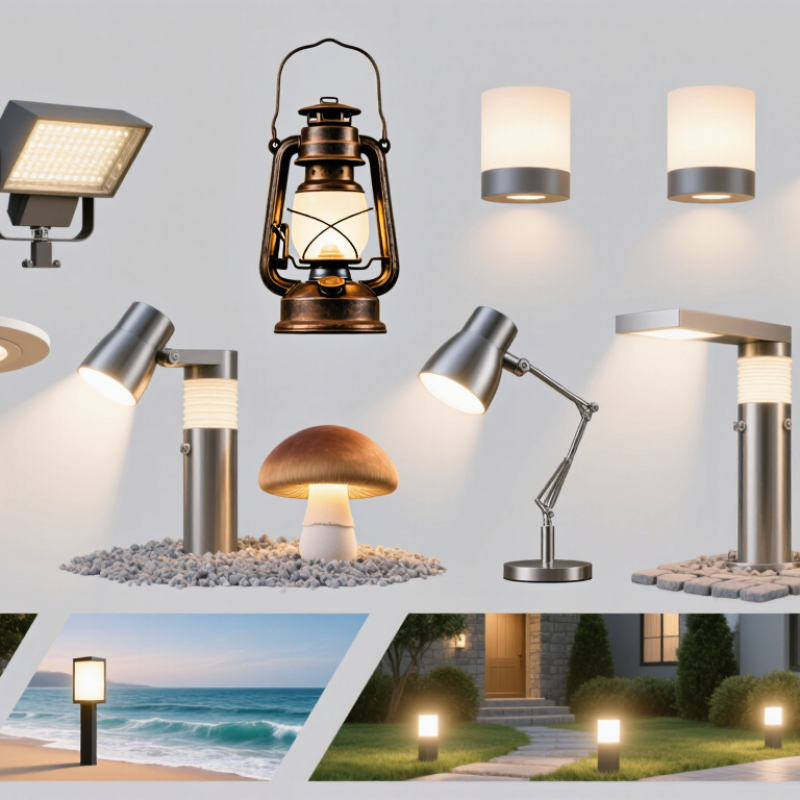
Outdoor lighting works best when chosen by use, not appearance. For global buyers, ten useful categories include path lights, wall fixtures, floodlights, spotlights, bollards, step lights, string lights, underwater lights, solar units, and smart controls. Path lights guide visitors along gravel or paving. Wall fixtures improve entry visibility and address recognition. Floodlights cover broad service areas, while spotlights highlight trees, signs, or architectural details. Bollards suit driveways and public walkways. Step lights help reduce trip risks on terraces and stairs.

Solar lights fit remote gardens where wiring is difficult, but shade can reduce performance. Smart controls help commercial sites schedule dimming, yet connectivity may fail during outages. Underwater products need sealed construction and professional installation. Check ingress protection, operating temperature, voltage, mounting method, and replacement access before ordering. I have seen attractive fixtures fail because drainage was ignored. That detail is easy to miss.

Tips: Match brightness to the task, not the highest lumen number. Use warm light for hospitality areas and clearer light where detail matters. Confirm local electrical requirements and test a sample outdoors at night. Leave room for maintenance. A perfect plan rarely exists; revise spacing after observing glare, shadows, and seasonal changes. Ask suppliers for photometric data, warranty terms, spare parts, and verified safety documents. Good records improve reliability across climates and projects.

Evaluation Criteria for Comparing Outdoor Lighting Products

10 Best Outdoor Lighting Products for Global Buyers

Comparing outdoor lighting requires more than checking lumen numbers. Start with the lighting purpose, such as pathway safety, wall washing, or outdoor work. A reliable product should provide clear photometric data, including beam angle, light distribution, and tested lumen output. Color rendering also matters. A CRI above 80 usually reveals landscape colors more naturally, while warmer color temperatures can reduce visual harshness at night.

Weather resistance deserves close attention. Look for an appropriate IP rating, corrosion-resistant housing, sealed cable entries, and stable performance after temperature changes. In coastal areas, salt exposure can damage weak finishes quickly. Ask for test reports, safety documentation, warranty terms, and installation instructions. Requirements differ between countries, so buyers should verify local electrical rules instead of trusting a general sales claim. It takes time, but missing paperwork can create expensive delays.

Energy use should be measured beside useful light, not advertised wattage alone. Check efficacy, dimming compatibility, control options, and expected lumen maintenance. Solar products need battery capacity, charging performance, and winter data. I once judged a fixture by its bright first impression and overlooked glare on a nearby window. That mistake changed my checklist. Real samples, nighttime trials, and installer feedback often reveal weaknesses that specifications hide. Product comparisons are never perfectly objective. Mounting height, weather, and surrounding surfaces can change the result.

10 Best Outdoor Lighting Products for Global Buyers - Evaluation Criteria for Comparing Outdoor Lighting Products

A practical comparison of representative outdoor lighting product configurations based on performance, durability, installation, energy use, and international purchasing considerations.

No. Product Type Typical Application Light Output Power / Energy Source Color Temperature Ingress Protection Control Features Runtime / Coverage Installation Expected Service Life Indicative Price Range
1 Solar Pathway Light Garden paths, driveways, and walkways 30–100 lm per unit 1–3 W solar panel; rechargeable battery 2700–3000 K IP65 or higher Dusk-to-dawn photocell; optional on/off switch 8–12 hours after a full charge Ground stake; no wiring required LED: 25,000–50,000 hours US$15–60 per unit
2 LED Wall Pack Building entrances, warehouses, and exterior walls 2000–6000 lm 20–60 W AC input 3000–5000 K IP65–IP66 Photocell, motion sensor, or timer compatible Fixed illumination; typically 100–180 m² coverage Surface-mounted; professional wiring recommended 50,000–100,000 LED hours US$45–180 per unit
3 Solar Floodlight Security areas, yards, signs, and remote sites 800–3000 lm 10–30 W solar panel; lithium battery 4000–6500 K IP65–IP66 Remote control, motion sensing, adjustable brightness 6–12 hours; motion mode may extend runtime Wall or pole mount; separate panel often included LED: 30,000–50,000 hours US$50–220 per unit
4 Motion-Sensor Security Light Residential entrances, garages, and service areas 1000–2500 lm 15–30 W AC input or solar battery 3000–5000 K IP44–IP65 PIR sensor; adjustable time, sensitivity, and detection range Detection range typically 8–12 m Wall-mounted; AC models require electrical installation 30,000–50,000 LED hours US$30–150 per unit
5 In-Ground Uplight Trees, façades, monuments, and landscape features 300–1200 lm 5–18 W low-voltage AC/DC 2700–4000 K; RGB options available IP67 Beam-angle adjustment; dimming or RGB control on selected models Beam spread typically 15°–60° Recessed ground installation; drainage layer required 50,000–70,000 LED hours US$70–300 per unit
6 Low-Voltage Landscape Spotlight Trees, plants, walls, and architectural accents 500–1500 lm 4–20 W, usually 12 V AC/DC 2700–4000 K IP65–IP67 Adjustable head; compatible with timers and photocells Beam spread typically 20°–60° Stake or surface mount; transformer required 50,000–70,000 LED hours US$35–180 per unit
7 Outdoor String Light Patios, restaurants, terraces, and event spaces 25–80 lm per bulb 0.5–2 W per LED bulb; AC or solar 2200–3000 K IP44–IP65 Dimmer, timer, remote control, or smart control depending on model Length typically 7–30 m per set Suspended mounting with hooks or guide wire 20,000–50,000 LED hours US$25–160 per set
8 LED Bollard Light Commercial paths, parks, campuses, and hotel grounds 500–2000 lm 8–30 W AC or low-voltage input 2700–4000 K IP54–IP65 Optional photocell, timer, or dimming interface Typical spacing: 3–8 m between fixtures Anchor bolts or buried base; permanent installation 50,000–100,000 LED hours US$100–450 per unit
9 Outdoor Ceiling or Pendant Light Covered porches, balconies, verandas, and outdoor dining 600–1800 lm 8–25 W AC input 2700–3500 K IP44–IP65 Wall switch; dimming available on selected models Suitable for covered areas; broad downward illumination Ceiling or junction-box mounting 30,000–50,000 LED hours US$45–250 per unit
10 Solar Street or Area Light Roads, parking areas, public spaces, and large compounds 3000–12,000 lm 40–150 W solar panel; lithium battery 4000–6500 K IP65–IP66 Photocell, programmable dimming, motion sensing, remote monitoring options 8–14 hours; recommended spacing 20–35 m depending on optics Pole-mounted; foundation and structural assessment required LED: 50,000–100,000 hours; battery often 3–8 years US$250–1200 per unit
Evaluation note: Specifications and prices represent realistic typical market ranges for comparable outdoor lighting products. Actual performance depends on design, climate, installation quality, battery capacity, local electrical standards, shipping terms, and certification requirements.

Ten Outdoor Lighting Products Recommended for Global Buyers

Ten Outdoor Lighting Products Recommended for Global Buyers should balance efficiency, weather resistance, safety, and local installation needs. The recommended range includes solar pathway lights, LED wall lanterns, motion-sensor floodlights, bollard lights, inground lights, deck lights, string lights, step lights, portable rechargeable lamps, and smart outdoor fixtures.

Energy performance matters. The International Energy Agency reports that lighting uses about 15% of global electricity consumption. The U.S. Department of Energy states that LED products can use at least 75% less energy than incandescent lighting. They may also last up to 25 times longer. However, a high lumen number alone can mislead buyers. Beam angle, glare control, color temperature, and mounting height affect real performance. I prefer warm white light near homes. Cooler light can improve visibility in open work areas, but it may feel harsh.

Weather details deserve close attention. Look for suitable IP ratings, sealed cable entries, corrosion-resistant housings, and replaceable components. Solar pathway lights suit gardens with strong daily sunlight. Motion-sensor floodlights work better near driveways and service entrances. Portable rechargeable lamps help during temporary events or power interruptions. The Illuminating Engineering Society emphasizes measured photometric data for reliable lighting design. Still, product testing can differ between laboratories. Buyers should check regional voltage, plug standards, warranty terms, and recycling rules. My own view is less certain with smart fixtures; software support may end before the hardware fails.

Climate, Safety, Energy, and Regional Compatibility Considerations

Outdoor lighting buyers need more than attractive housings and bright specifications. Climate should guide the product choice. In coastal areas, salt-resistant coatings and sealed connectors reduce corrosion. In cold regions, check the operating temperature range before purchasing. Desert installations need UV-stable materials and dust protection. The IEC 60529 standard defines IP ratings, but an IP rating alone does not guarantee long-term outdoor performance.

Safety also depends on control, not only brightness. The Illuminating Engineering Society recommends careful glare control, uniform illumination, and suitable mounting heights. Motion sensors can reduce unnecessary operation near homes and pathways. However, excessive brightness may disturb residents, wildlife, and drivers. That risk is often underestimated. Photometric files, beam angles, and color temperature deserve review before installation.

Energy performance remains central for global buyers. The U.S. Department of Energy reports that LED products use at least 75% less energy and can last up to 25 times longer than incandescent lighting. Still, wattage is not enough. Compare lumens, efficacy, standby consumption, and replacement access. Regional compatibility matters too: confirm voltage, frequency, plug design, surge protection, and local certification requirements. The International Energy Agency’s Energy Efficiency 2023 report also identifies efficient lighting as a practical route to reducing electricity demand. A lower price can become expensive when spare parts are unavailable. That point is easy to miss.

How to Match Outdoor Lighting Products to Projects and Budgets

10 Best Outdoor Lighting Products for Global Buyers

How to Match Outdoor Lighting Products to Projects and Budgets

For global buyers, outdoor lighting selection should begin with the project, not the catalogue. A coastal walkway needs corrosion resistance, controlled glare, and stable performance in wind-driven rain. A warehouse yard needs wide optics, higher mounting heights, and simple maintenance access. The International Energy Agency reports that lighting uses roughly 15% of global electricity. The U.S. Department of Energy states that LED products can use at least 75% less energy and last up to 25 times longer than incandescent lamps. These figures support lifecycle budgeting, not automatic premium spending. A cheap fixture can become expensive when failures require lifts or road closures.

Tips: Write the target lux level, mounting height, IP rating, beam angle, color temperature, and warranty into the request. Compare delivered lumens. Request photometric files and a sample unit before approving large quantities. Check local voltage, surge protection, spare-part access, and installer skills. I have seen attractive low-cost fittings underperform because their optics ignored tree growth and neighboring homes. That mistake is easy to miss.

Budget matching works best through three cost views: purchase, installation, and operation. For a public plaza, warm light, precise shielding, and dimming may justify higher upfront costs. For temporary construction areas, robust, replaceable units may matter more than advanced controls. The IEA’s Energy Efficiency 2023 report supports efficiency-led investment, but market averages cannot replace site calculations. Use a five-year energy and maintenance model, then test one zone at night. Reconsider assumptions. A real project may expose glare, uneven illumination, or cleaning costs that a spreadsheet misses.

10 Best Outdoor Lighting Products for Global Buyers

Typical rated power by product type helps buyers match outdoor lighting solutions to project scale, illumination needs, and budget priorities.

Lower-power products suit residential, hospitality, and pathway projects, while higher-power fixtures are generally selected for roads, parking areas, façades, and large commercial sites. Values are representative planning benchmarks for generic products and exclude brand-specific data.

Our story

When The Light Went On

The idea for Acrospire was formed in 2012 when founder Tim envisioned a different kind of lighting manufacturer: one that would not only deliver outstanding customer experiences but also prioritise fair treatment for its employees.

We’ve come a long way

Working from any nook and cranny we could find

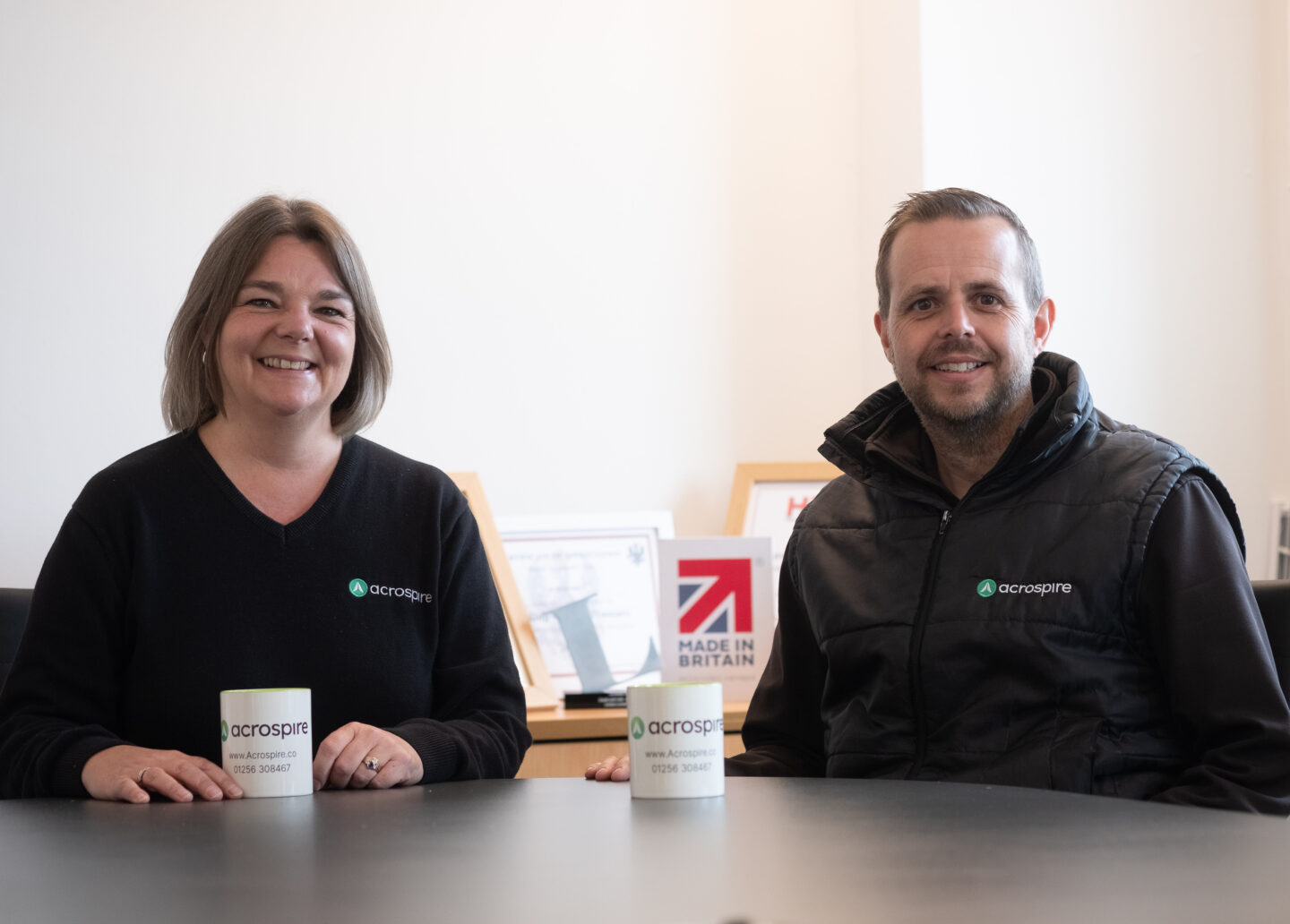
Motivated by the belief the industry wanted and needed better, Tim shared his plan to establish his own venture with Hatty, who simply couldn't let him do it alone.

The rest, as they say, is history.

Protecting local jobs and ensuring the best quality possible.

The products sold should, where possible be manufactured here in the UK

Working from a rented office by day and assembling lanterns in a garage at night, Tim and Hatty set to work.

11 Years later

and a lot has changed

Acrospire now inhabits a 14000² ft manufacturing facility in Basingstoke, Hampshire. We’re a proud partner of the Made in Britain scheme, ISO9001 certified and a member of all relevant lighting industry trade bodies.

We've built a reputation to be proud of

Along with great relationships with our customers and a great team! We've attracted some of the most experienced members of the lighting industry, all by following one golden rule.

A simple ethos

Creating work to be proud of

That runs through all that we do. Customers who have made the switch to Acrospire have found working with us to be a breath of fresh air.

Market leading warranty

If you’re a professional in the lighting industry, you’re probably familiar with warranties that range from 3 to 10 years, with extensions available on special request or at additional cost. At Acrospire, where we’re proud to be different, we offer a market-leading simple 12-year warranty, as standard.

Tight Control on Quality

We focus on our customers not our competition. We manufacture our products in the UK: with the exception of our solar products, our supply chain is within a 60-mile radius of our factory in Basingstoke: to maintain greater control over quality. We al

Speed is key

Speed of response is crucial when it comes to resolving warranty issues. If we’ve made a mistake, we own it, get to the root cause, and fix it as quickly as possible. We believe in timely communication with our customers and making the resolution pro

Test and Test Again

We believe in independent testing and certification. Our new product development is in line with ISO 9001. Many of our products hold ENEC Certification. To meet the requirements of ENEC we also send random product samples for third party safety testi

Quality by design

Our product design is another key factor in our ability to offer a 12-year warranty. We value engineer rather than cost cut, never compromising on quality. We stick to our processes and engage with our supply chain to ensure that every product meets