2026 Best LED Module Light Solutions for Global Buyers?
The demand for LED Module Lights is rapidly increasing worldwide. According to industry reports, the global LED market is expected to reach $160 billion by 2026. This growth is driven by the need for energy-efficient lighting solutions. LED Module Lights offer excellent durability and longevity compared to traditional lighting options. Their efficiency can significantly reduce energy consumption, making them a favorite among eco-conscious consumers.
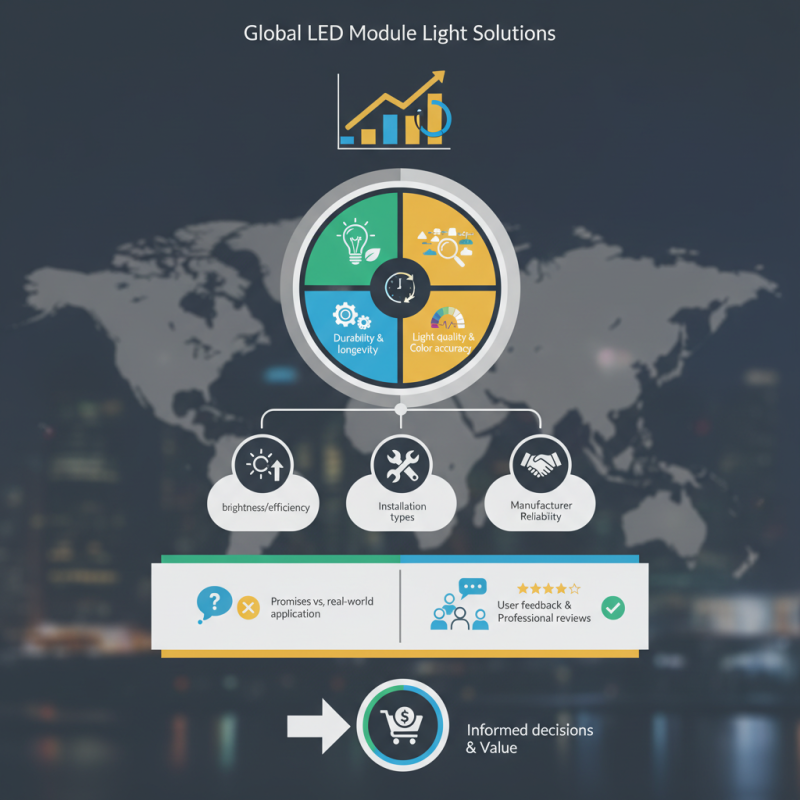
Moreover, LED technology continues to evolve. Recent innovations focus on improving light quality and color accuracy. However, not all LED Module Lights are created equal. Buyers must consider factors like brightness, efficiency, and installation types. While the variety available is vast, it can lead to confusion. Understanding product specifications and manufacturer reliability is crucial to ensure value for money.
As we navigate the diverse landscape of LED Module Lights in 2026, careful assessment is key. Some products may promise high performance but fail in real-world applications. Assessing actual user feedback and professional reviews will help buyers make informed decisions. Balancing promises and performance can ultimately lead to the best choices in this expanding market.
Overview of LED Module Lights: Types and Applications
LED module lights are a versatile solution in various industries. These lights are popular for their efficiency and adaptability. They come in different types, such as panel lights, flexible strips, and high-bay modules. Their applications range from residential lighting to commercial signage, showcasing their wide utility.
Each type of LED module has unique features. Panel lights provide a sleek design for offices. Flexible strips can illuminate hard-to-reach areas, adding creativity. High-bay modules are essential in warehouses, offering bright coverage. However, selection can be challenging. Buyers must consider factors like brightness, energy consumption, and installation ease.
While many options exist, not all solutions meet expectations. Some may offer lower brightness than advertised. Others might lack longevity, resulting in frequent replacements. It’s vital for buyers to research and compare products. Reading reviews and seeking expert advice can help in making informed choices. Balancing cost with quality is crucial for long-term satisfaction.
Key Features to Consider When Choosing LED Module Lights
When choosing LED module lights, several key features demand attention. Brightness is essential. Assess lumens to ensure the light meets your needs. Consider energy efficiency as well. Higher efficacy means lower energy costs, which benefit both the environment and your wallet.
Color temperature influences the atmosphere. Warm white light creates a cozy feel, while cool white light enhances focus. Flexibility is another critical factor. Look for modules that fit various applications, from signage to accent lighting. Waterproof ratings are important too, especially for outdoor use.
Durability should not be overlooked. LEDs typically last longer than traditional bulbs, but quality varies. Investigate materials used in construction. These insights reveal much about potential longevity. Reflect on warranty periods as well; they often reflect a manufacturer’s confidence in their product. Understanding these features can guide you toward the best choice for your needs.
Top Brands and Manufacturers in the LED Module Light Market
In the evolving landscape of LED module lights, buyers have a myriad of choices. Various manufacturers focus on innovation and quality. Different regions specialize in unique technologies. Evaluating brand reputation is crucial. How do they meet global demands? This question drives informed decisions.
Quality often varies across brands. While some excel in energy efficiency, others land in aesthetic designs. Certifications may showcase their commitment to standards, yet not all brands possess the same level of reliability. Buyers should investigate product durability and performance data. Customer feedback can reveal strengths and weaknesses.
Manufacturers are adapting to changing market dynamics. Trends in sustainability and design are taking center stage. However, affordability remains a critical barrier for many. Striking a balance between cost and quality is challenging. Careful consideration of supply chains and sourcing can impact overall value. Ensuring products align with specific needs adds another layer of complexity.
2026 Best LED Module Light Solutions for Global Buyers
| Dimension | Specification | Application | Energy Efficiency | Lifespan (hours) |
| 500mm x 500mm | 3000K, 120lm/W | Indoor Commercial Lighting | A+ | 50,000 |
| 600mm x 300mm | 4000K, 150lm/W | Retail Display | A++ | 70,000 |
| 300mm x 300mm | 6500K, 100lm/W | Outdoor Advertising | A+ | 30,000 |
| 1000mm x 1000mm | 3000K, 200lm/W | Warehouse Lighting | A++ | 80,000 |
| 1200mm x 300mm | 5000K, 130lm/W | Hospital Lighting | A+ | 60,000 |
Comparative Analysis of LED Module Light Solutions in 2026
The LED module light market in 2026 showcases various innovative solutions for global buyers. A recent report from Statista indicates that the global LED lighting market is expected to reach $137.3 billion by 2026, reflecting a robust growth trajectory. The report emphasizes energy efficiency and longevity as key drivers behind this trend. Various modules, such as flexible LED strips and panel lights, are gaining popularity due to their versatility and ease of installation.
When comparing LED module light solutions, factors like brightness, color quality, and cooling mechanisms play critical roles. The LM-79 standard for photometric testing provides valuable insights into the performance of different models. Solutions with high Color Rendering Index (CRI) ratings above 90 prove more effective in enhancing the visual appeal of spaces. Yet, it’s important to note the potential environmental impact of some LED products, which may use subpar materials.
Tip: Always check the certification of the LED products. Look for energy-saving labels that confirm efficiency.
Reliability remains a concern. Many LED modules have inconsistent performance. User reviews highlight the importance of warranties, as many modules last only a few years before performance declines. Balancing quality with affordability is crucial when sourcing LED solutions.
Tip: Consider long-term savings rather than just upfront costs. A cheaper module may indeed cost more over time.
Future Trends in LED Module Lighting Technology and Innovations
The landscape of LED module lighting is rapidly evolving. Future innovations promise extraordinary advancements in energy efficiency, color accuracy, and design flexibility. Designers and architects are increasingly seeking solutions that blend aesthetics with functionality. This shift is reflected in the development of smart LED modules. These devices now offer customizable settings, allowing users to adjust brightness and color temperature effortlessly.
Tips: Consider energy performance. Look for LED solutions with high lumens per watt ratings while minimizing energy consumption. This ensures sustainable innovation.
Another trend is the integration of artificial intelligence. AI-driven systems are optimizing lighting in real time. They adapt to environmental changes, enhancing user experience and comfort. This technology still has room for improvement. The challenge lies in ensuring compatibility with existing infrastructures.
Tips: Assess system compatibility. Innovations should integrate smoothly with your current setup to avoid costly upgrades. Technology should enhance, not complicate.
Sustainability in LED technology is becoming crucial. Manufacturers are exploring eco-friendly materials and end-of-life recyclability. Yet, not all approaches are perfect. Some may not provide the durability needed for long-term use. The exploration of green solutions continues, fueling breakthroughs worth watching.
2026 LED Module Light Solutions: Market Trends
This chart illustrates the projected growth trends in the LED module lighting market across various sectors by 2026, indicating significant advancements and adoption in residential, commercial, and industrial applications.